REVIEW · SIENA
Chianti: Wine and Olive Oil Tasting with Cellar Tour
Book on GetYourGuide →Operated by Fattoria Santo Stefano · Bookable on GetYourGuide
Old stone cellars, serious flavor.
This Chianti wine and olive oil tasting pairs a farmhouse visit with a look at how the estate matures its wines and handles fresh extra-virgin olive oil. You’ll move from modern fermentation tanks to a small, rustic 18th-century cellar where barrels shape what ends up in your glass.
I especially like the two-part cellar tour—big tanks for fermentation, then French oak barrels for aging—and the chance to understand the process in plain language instead of just sampling. You’ll also get a close look at the Orciaia, where the oil is stored soon after harvest and pressing.
One heads-up: the tour may start with one person showing you around the grounds and cellar, then hand you off for the tasting. If you want heavy, detailed wine talk during the tasting itself, plan to ask questions early and directly so the experience stays engaging.
In This Review
- Key things to look forward to
- The farmhouse intro that puts you in the right mood
- The big wine cellar: stainless tanks and cement fermentation
- The 18th-century cellar: French oak and six months of aging
- Vinsanto in the same cellar: amber dessert wine from small barrels
- The Orciaia: seeing extra-virgin olive oil storage after pressing
- The final shop tasting: wine, olive oil, and local food
- Price and value: $41 for a 1-hour cellar and tasting
- Timing, comfort, and how to plan your day
- Who this tour suits best (and who might want something else)
- Should you book this Chianti wine and olive oil cellar tour?
- FAQ
- How long is the Chianti wine and olive oil tasting with cellar tour?
- Where is the meeting point?
- Is transportation included?
- What’s included in the tour?
- What languages are available for the live tour guide?
- Is this tour private?
- Is there free cancellation?
Key things to look forward to
- 18th-century barrel room: small, rustic cellar space where aging happens
- French oak aging for six months: clear explanation of how Chianti develops
- Vinsanto sampling potential: amber dessert wine made in small barrels
- Orciaia olive oil storage: see the oil handled soon after pressing
- Chianti farmhouse shop tasting: wine and extra-virgin olive oil with local food
The farmhouse intro that puts you in the right mood
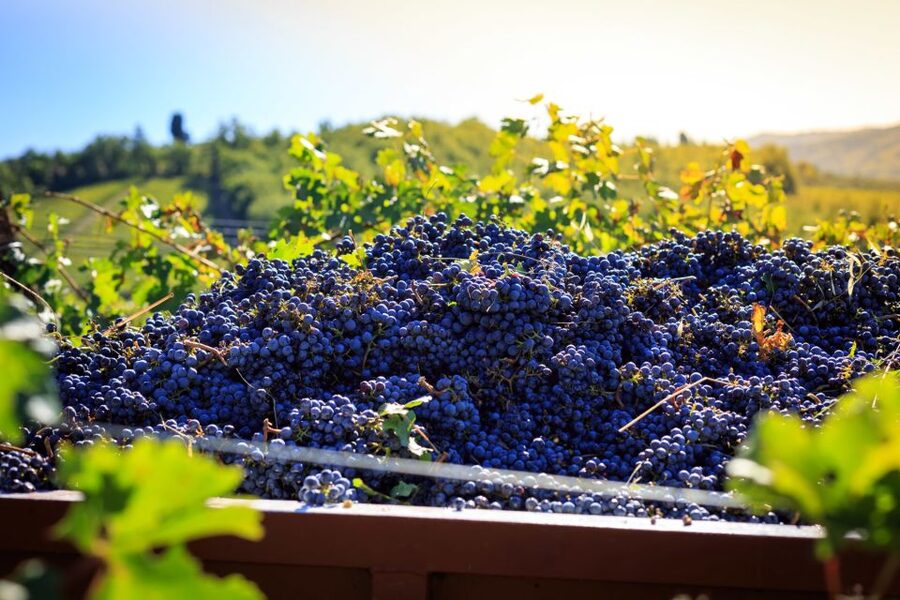
Your tour begins at Fattoria Santo Stefano, in the Greve in Chianti area of Tuscany. Expect a warm welcome and a quick orientation to the property before you step underground. It’s not a rushed “walk past stuff” experience. You get enough context to connect what you’re seeing with what you’re tasting.
This first stage matters because Chianti isn’t just one flavor. It’s made from grape decisions, fermentation choices, aging decisions, and yes, a farm’s day-to-day rhythm. When a guide explains how the buildings were made for the work—cellar layout, storage logic, and food-and-wine production on the estate—you start tasting with smarter expectations.
You’ll also get grounded in the setting: a functioning Tuscan farmhouse environment, not a museum set dressed for tourists. The vibe is rustic and practical, the way farm operations tend to be. If you like authentic, hands-on places, this kind of start is a big reason the tour gets high marks.
You can also read our reviews of more tours and experiences in Siena.

The big wine cellar: stainless tanks and cement fermentation
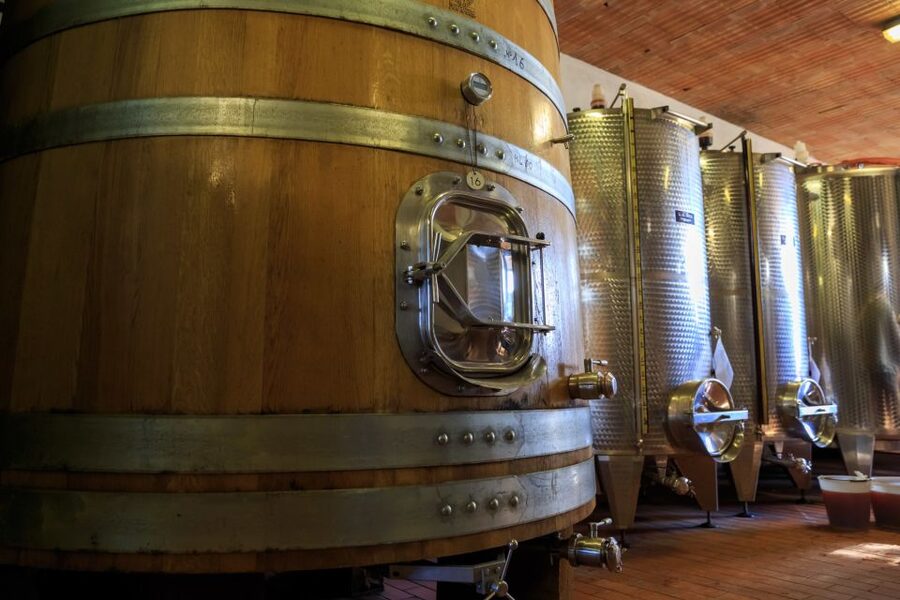
After the grounds intro, you’ll head into the farmhouse’s larger wine cellar. Here, you’ll see the stainless steel and cement tanks used for fermentation. These aren’t just cool-looking props. They’re a clue to the winemaking approach on the estate.
Stainless steel is often associated with clean fermentation and precision control. Cement tanks, depending on the house style, can be used to support a gentler fermentation environment. The guide’s job in this part is to translate that into what you’ll notice later in the glass. Even if you don’t remember every technical term, you’ll walk away understanding that different tanks can shape aroma and texture.
This stop also helps you pace your tasting. I like when a tour gives you “mental labels” before you sip, because then you’re not guessing what you like or why. Instead, you can focus on how one wine feels compared with the next.
Practical note: cellars are usually cooler and a bit uneven underfoot. It’s not dramatic, but comfortable shoes do matter here.
The 18th-century cellar: French oak and six months of aging
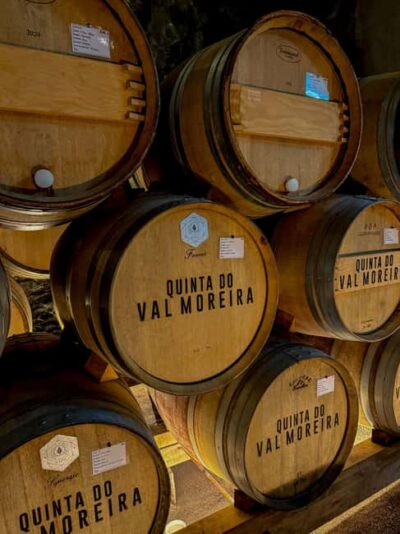
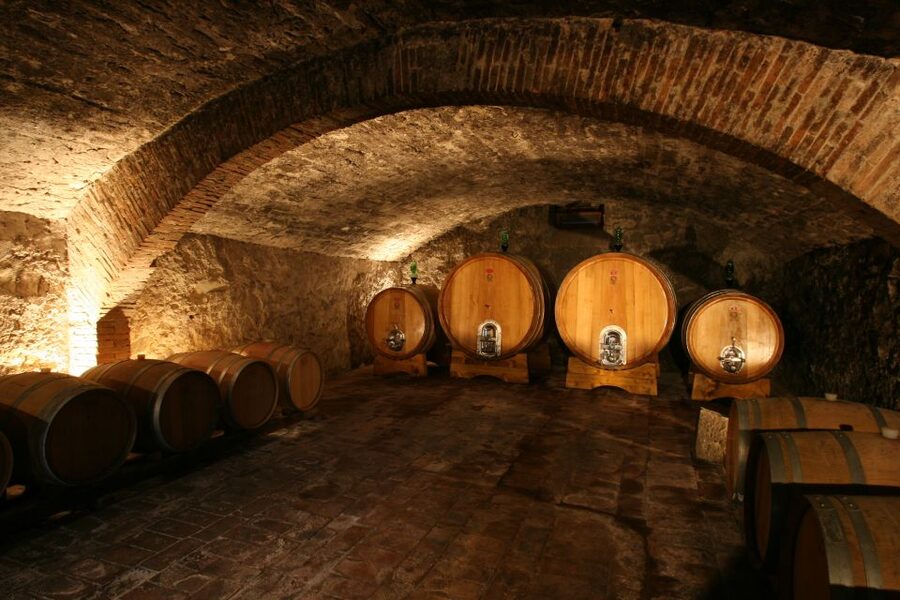
Next comes the small and rustic 18th-century cellar. This is the star room for the way it makes time tangible. You’ll see the large French oak barrels where the wine is transferred and remains for about six months to develop flavor.
That six-month window is important. It’s not a quick overnight transformation; it’s a slower, flavor-building process where oak can contribute structure and subtle seasoning notes. The barrels are large, and that scale changes how wine interacts with wood over time. You’re learning the why behind that richer, more rounded style that Chianti fans often look for.
If you’ve tasted wine without any aging context, this part can be a lightbulb moment. You start to connect what you smell—spice tones, deeper fruit character, a more settled texture—with the idea that time and wood are doing work you can’t see.
The room itself is also a sensory experience. It feels older, tighter, and more atmospheric than the larger modern cellar. That contrast helps you remember the process later when you’re back in the shop tasting several local varieties.
Vinsanto in the same cellar: amber dessert wine from small barrels
In that same older barrel cellar, you’ll also find the small barrels used for producing Vinsanto. Vinsanto is a sweet local dessert wine, known for its amber color, and it’s made in a way that highlights deeper, concentrated flavors.
What I like about placing Vinsanto here is that it shows the cellar isn’t only for one kind of wine. It’s a shared infrastructure for different products, which makes the visit feel like a working farm operation rather than a one-track tasting.
Even though you’re focused on Chianti for the main theme, this stop gives you a richer picture of the estate’s range. You’ll be able to spot how the tour’s logic expands: fermentation happens in one set of tools, aging happens in another, and dessert wine follows its own approach within the same cellar environment.
If you enjoy sweet wines or want something different from the typical red-only tasting, this adds real value to the experience.
The Orciaia: seeing extra-virgin olive oil storage after pressing
After the cellar rooms, you’ll shift from wine to olive oil at the farmhouse’s impressive Orciaia. This is where the extra-virgin olive oil is stocked directly after harvesting and pressing.
For many visitors, olive oil tasting is treated like a side note. Here, it gets treated as a core part of the visit, and you can see why. When you understand where the oil sits after pressing—how it’s stored and handled—you start tasting more critically. Fresh oil tends to show clearer fruit and peppery notes, while storage choices can affect softness over time.
I also appreciate that this isn’t just a show-and-taste moment. You’re seeing the “after the press” stage, which is when quality management really matters. Even if you don’t speak “olive oil nerd,” you’ll pick up the idea that great oil is about timing and careful handling, not just marketing language.
The final shop tasting: wine, olive oil, and local food
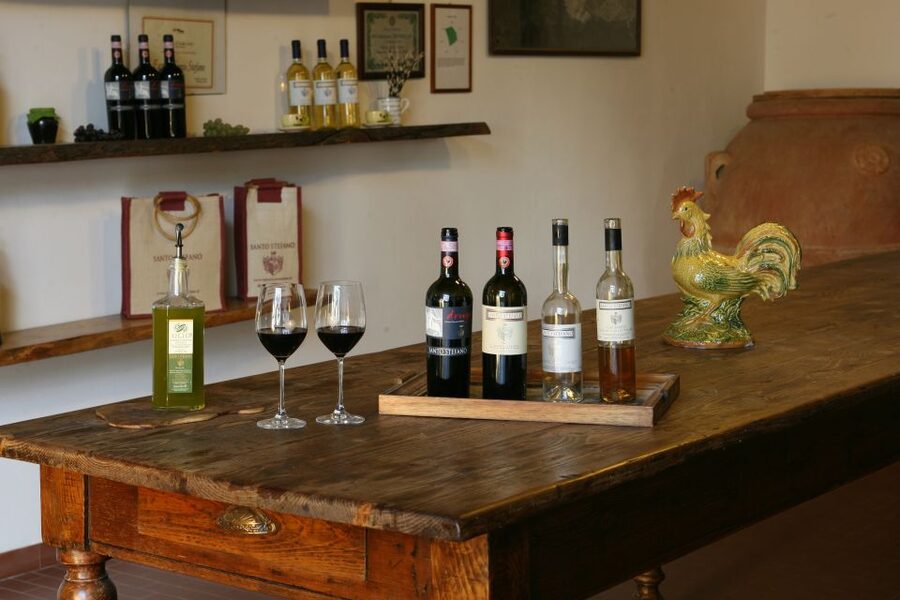
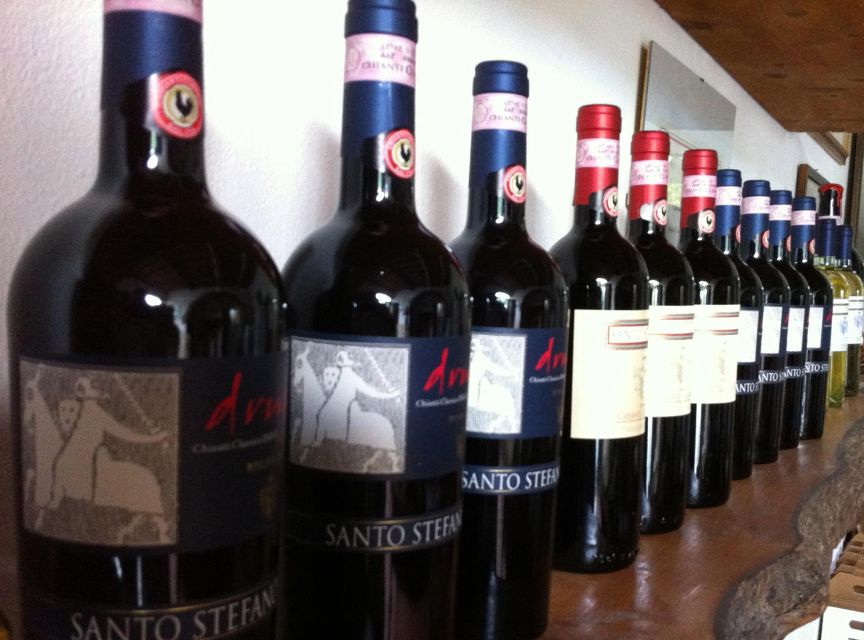
The tour ends back in the small wine shop with a tasting of excellent local wine varieties and extra-virgin olive oil. You’ll also have local food during the experience.
This ending is where you translate everything you learned underground. By now you know:
- where fermentation happens (stainless steel and cement tanks)
- where the Chianti ages (French oak barrels for around six months)
- how another local wine style fits into the cellar (Vinsanto in smaller barrels)
- how the oil is stored after pressing (Orciaia)
Now you get to taste and decide what you like.
One detail to keep in mind: the tour experience may begin with the owner or a host guiding you through the grounds and cellar, then shift to someone else for the tasting portion. I’d treat the tasting like your main conversation time. Ask what each wine is like, how the oil is meant to taste, and what flavors the estate expects you to notice. If the tasting goes quiet or you feel left alone too long, speaking up early usually fixes it fast.
Food matters here. Even if you’re not a big “pairing” person, food helps reset your palate between sips. And it makes the tasting feel more like a farm experience and less like a line-up of samples.
Price and value: $41 for a 1-hour cellar and tasting
At about $41 per person for a 1-hour experience, the value depends on what you want from Tuscany wine tourism. If you’re looking for a quick stop to say you tried Chianti, this is probably more structured than you need. But if you want real estate access, a cellar tour with process context, and both wine and olive oil tasting, the price feels reasonable for the quality of the visit.
The big value piece is that you’re not only tasting. You’re also seeing where the product comes from:
- modern fermentation tools
- an 18th-century aging space
- a specific oil storage area tied to harvest and pressing
Those stops are tightly packed into one hour, which makes the tour efficient if your days are scheduled. It’s also a good length for first-time wine tasters who don’t want a long, multi-hour program where they feel behind and tired.
If you’re spending time in Greve in Chianti anyway, this is a strong way to add depth without turning your day into a marathon.
Timing, comfort, and how to plan your day
This experience runs for about 1 hour. That’s long enough to cover the key rooms and finish with tasting, but short enough that you can fit it between meals or around a vineyard lunch.
You’ll want comfortable shoes. Cellar floors and older stone spaces can be uneven, and you’ll be walking between levels and rooms. Dress for a cooler indoor environment too, since cellars are typically cooler than the sun outside.
Transportation is not included. So if you’re based in Florence, Siena, or another city, plan on using local taxi services, a hired driver, or joining an add-on transport option if your booking site offers it. Being car-free isn’t impossible, but it does mean you should think ahead so you don’t end up stressed about timing.
Good news: the tour skips the ticket line. That matters in Tuscany, where small wineries and farms can be busy at peak hours. Less waiting means more sipping.
Who this tour suits best (and who might want something else)
This is a great fit if you want a Chianti wine and olive oil tasting that’s anchored in real farm production. You’ll get more than a generic “here’s the red, here’s the white” run. You’ll see how tanks and barrels relate to what ends up in your glass, and you’ll taste olive oil as a product with its own handling steps.
You’ll also like it if you enjoy small-group attention. The experience is described as a private group. That can make it easier to ask questions and keep the flow personal, especially if you’re the kind of traveler who likes to learn why something tastes the way it does.
Who might not love it? If you want a long, slow, scenic vineyard walk or a heavy focus only on vineyards and grape varieties, this is more cellar-and-tasting oriented. You’re coming for the underground winemaking and the olive oil process, so keep your expectations aligned.
Language-wise, the live guide is available in English and Italian, which is useful if you’re bilingual or if you want the guide to explain clearly without switching on the fly.
Should you book this Chianti wine and olive oil cellar tour?
Book it if you want a tight, high-value hour in Greve in Chianti where the tasting is backed by a real cellar tour. The mix of fermentation tanks, an 18th-century barrel room, Vinsanto production barrels, and the Orciaia olive oil storage makes the experience feel grounded in how the farm actually works.
Skip it or consider a different format if you dislike tastings where the conversation may shift between hosts, or if you need long, detailed explanations during the tasting itself. If that’s you, go in with curiosity and ask your questions early so you get the detail you want.
For most people—especially first-timers who want a smarter way to taste Chianti—this is the kind of experience that leaves you with more than just a souvenir bottle. You leave with a mental map of how the flavors get built.
FAQ
How long is the Chianti wine and olive oil tasting with cellar tour?
The experience lasts 1 hour.
Where is the meeting point?
You meet at Fattoria Santo Stefano, Via Collegalle 3, 50022 Greve in Chianti.
Is transportation included?
No. Transportation is not included, but it may be available as an add-on.
What’s included in the tour?
The tour includes a cellar tour and wine tasting.
What languages are available for the live tour guide?
The live guide is available in English and Italian.
Is this tour private?
Yes, it’s listed as a private group.
Is there free cancellation?
Yes, you can cancel up to 24 hours in advance for a full refund.