REVIEW · SIENA
Chianti: Wine and Olive Oil Tasting with Cellar Tour
Book on GetYourGuide →Operated by Fattoria Santo Stefano · Bookable on GetYourGuide
Barrels and olive oil, all in one hour. At Fattoria Santo Stefano you get a proper cellar tour and a guided tasting of local Chianti wines and extra-virgin olive oil, plus food. One catch: transportation isn’t included, so you’ll want to plan how you’ll get to Via Collegalle 3 in Greve in Chianti.
I like the small-farm feel here. You’re inside real production spaces, not a showroom. And because it’s a private group with a live guide in English or Italian, you can ask questions without feeling rushed. Just bring comfortable shoes, because you’ll be walking around the property and cellars.
In This Review
- Key Points That Make This Tour Worth Your Hour
- A One-Hour Visit to Fattoria Santo Stefano
- Getting Oriented in Greve in Chianti
- Inside the Farmhouse: Grounds, Construction, and Production
- Large Cellar Tour: Stainless Steel and Cement Tanks
- The 18th-Century Cellar: French Oak and Six Months of Aging
- Vinsanto Barrels in the Same Old Room
- Orciaia: Where Extra-Virgin Olive Oil Is Stored After Pressing
- The Wine and Olive Oil Tasting (Plus Local Food)
- Price and Value for $39.86 in Chianti Country
- Who Should Book This Tour (And Who Might Skip It)
- Should You Book the Chianti and Olive Oil Tour?
- FAQ
- How long is the Chianti wine and olive oil tasting with cellar tour?
- What does the tour include?
- Is transportation included?
- Where does the tour start?
- Does the tour end somewhere else?
- Is this tour private?
- What languages are available?
- What should I wear?
- FAQ
- Is there free cancellation?
Key Points That Make This Tour Worth Your Hour
- Two different cellars in one visit: fermentation tanks up front, then a smaller 18th-century room with oak aging
- You taste what you see: Chianti wine and extra-virgin olive oil as part of the tour, not at the end with zero context
- French oak barrel aging gets explained with a clear timeline for how wine develops over months
- Vinsanto gets your attention: you’ll spot the small barrels used for this amber dessert wine
- The Orciaia shows olive oil storage right after harvesting and pressing
- Private-group pacing helps the guide slow down for questions (and the tasting usually feels generous)
A One-Hour Visit to Fattoria Santo Stefano
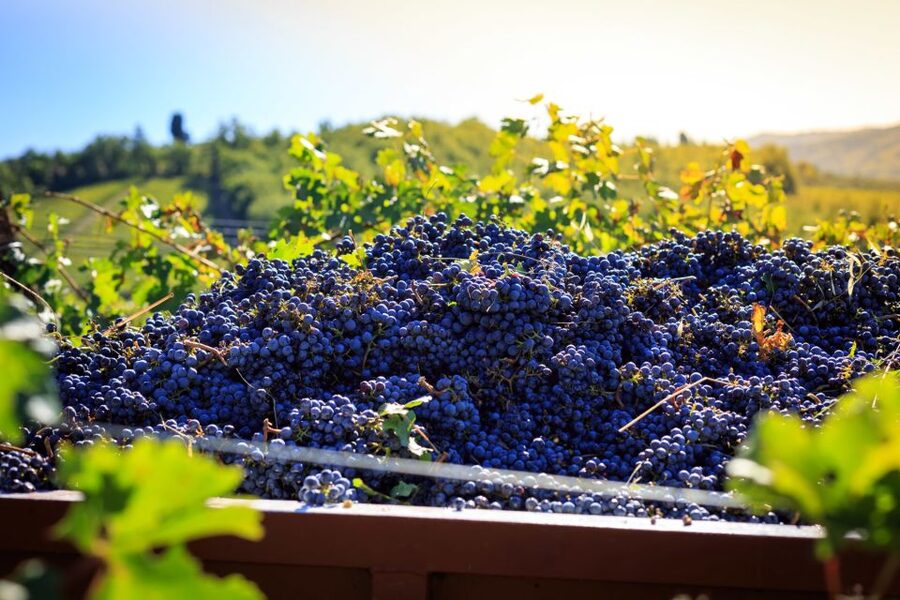
This is the kind of Tuscan experience that fits into a real day. No marathon. No hurry to catch the next train. Just a focused hour at a working farmhouse in Chianti country, where wine and olive oil aren’t just “products,” they’re the reason the place runs.
The best part is that you’re not only tasting. You’re getting the storyline behind the taste. You start with the farmhouse grounds and how the estate produces food and wine, then you move into the cellars where fermentation and aging actually happen. Finally, you end with wine and olive oil tasting and local bites. It’s a simple structure, and it works.
If you’re the type who likes to understand what you’re drinking (without turning the day into homework), you’ll enjoy this pace.
You can also read our reviews of more tours and experiences in Siena.

Getting Oriented in Greve in Chianti
The tour starts at Fattoria Santo Stefano, Via Collegalle 3, 50022 Greve in Chianti and ends right back where you began. That makes the logistics easy to manage. You can plan your day around a single stop, and you’re not stuck trying to figure out how to get to the next place afterward.
You also skip the ticket line, which matters more than people think. On a busy day, every small time-saver helps, and this one is built in.
One practical note: because transportation isn’t included, I’d treat this like a destination you reach on your own plan—car, taxi, or whatever arrangement you’re already using for Greve. If you’re staying in Florence, Sienna, or smaller nearby towns, check travel time before you book so you arrive relaxed, not sprinting.
Inside the Farmhouse: Grounds, Construction, and Production
Before you hit the cellars, you’re introduced to the property and its history. You’ll learn about the building’s construction and the role the estate plays in local food and wine production. This matters because Tuscan wine culture can feel like a blur if all you do is taste.
Here, you get a frame:
- why fermentation conditions matter,
- why aging needs time,
- why olive oil storage timing affects taste,
- and how the estate’s physical setup supports all of it.
It’s also the moment where the guide can explain what you’ll see next, so the cellars don’t feel like a random walk-in freezer for your brain. You leave with a mental map fast.
And because it’s a private group, you don’t have to sit back and hope the tour guide notices you have questions about the basics.
Large Cellar Tour: Stainless Steel and Cement Tanks
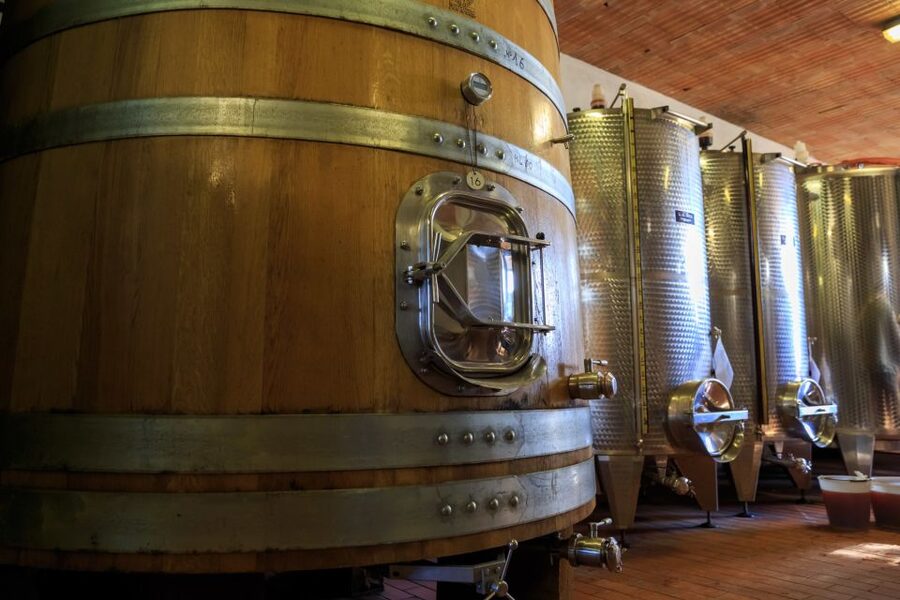
The first cellar stop is the larger wine cellar, where the production side of Chianti comes into focus. You’ll see stainless steel and cement tanks used for fermentation.
Why this is valuable: fermentation is where wine gets its early personality. Stainless steel tends to support cleaner, more controlled fermentation, while cement can help shape texture and character in a different way. You’re not asked to memorize technical terms. The point is to connect what you see—material and process—to what you taste later.
Also, seeing tanks in person makes wine less mysterious. It turns your tasting into something you can follow. You stop thinking, Where does this flavor come from? and start thinking, Ah, it begins there.
In a one-hour format, this stop does a lot of heavy lifting. It sets up the next move—oak barrels and time.
The 18th-Century Cellar: French Oak and Six Months of Aging
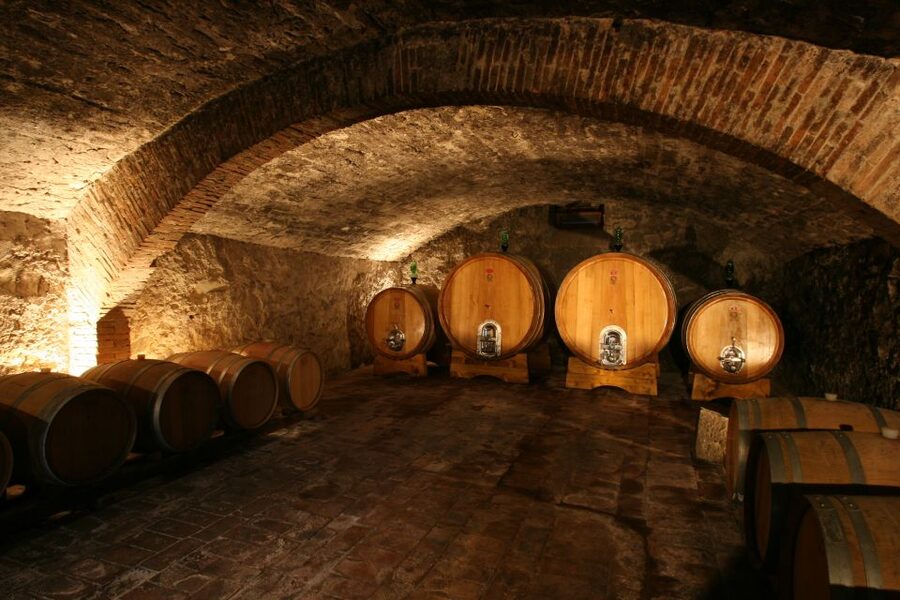
Next comes the smaller, more rustic cellar dating to the 18th century. This is where the experience gets especially memorable, because the room feels built for aging rather than efficiency.
Here, you’ll find large barrels made of French oak. The wine is transferred into these barrels and stays there for six months to develop its flavor profile. That aging period is the key idea: time in wood shapes aroma and adds depth.
You’ll also notice the contrast between the two cellar styles:
- the larger space with tanks (more about fermentation and early stages),
- the smaller old room with oak barrels (more about aging and development).
If you enjoy practical explanations—why one step comes before the next—this is a satisfying sequence. It makes Chianti feel like a process, not a label.
Vinsanto Barrels in the Same Old Room
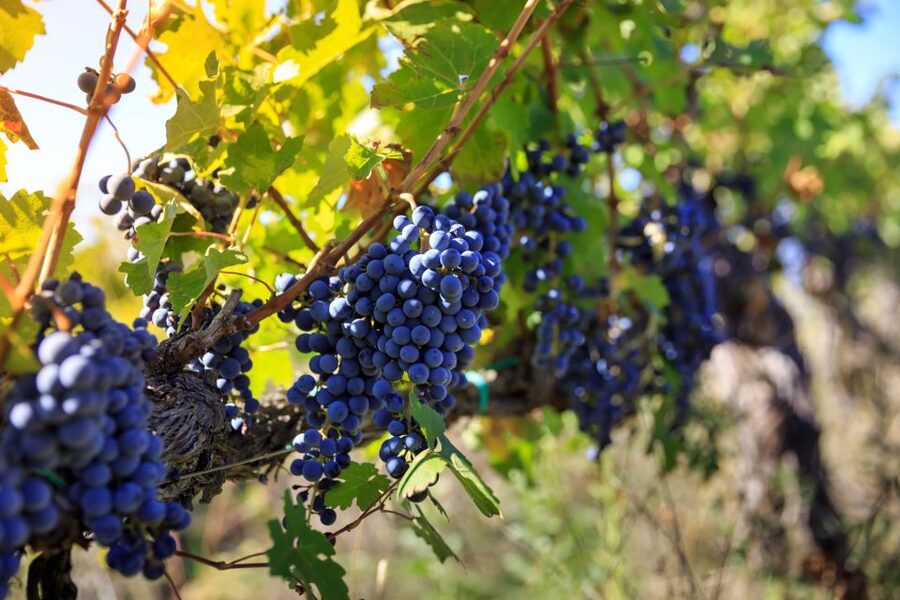
In the same 18th-century cellar, the tour also points out the little barrels used for Vinsanto. Vinsanto is described as an amber-colored local dessert wine, and seeing where it’s stored helps it click in your mind.
Even if you don’t think you’re a dessert-wine person, Vinsanto often wins people over because it’s not just sweet. It has the warmth of time and aging. Spotting the small barrels is a good reminder that wines don’t all share the same production rhythm.
This stop also adds variety to your learning. In a short tour, you’re not stuck only on Chianti. You get a second local tradition in the same place.
Orciaia: Where Extra-Virgin Olive Oil Is Stored After Pressing
After the wine side of things, you move to the Orciaia, where extra-virgin olive oil is stocked directly after harvesting and pressing.
This is one of those practical details that helps you understand why olive oil tasting is worth doing with context. Freshness and handling matter. The guide’s explanation connects the production step to what you’ll taste at the end.
Even if you already know olive oil basics, the Orciaia stop gives you a real-world picture of how estates manage their oil—again, not a concept, but a place. You’ll also likely notice how the tour keeps the senses working: wine first, then olive oil, then tasting with food.
The Wine and Olive Oil Tasting (Plus Local Food)
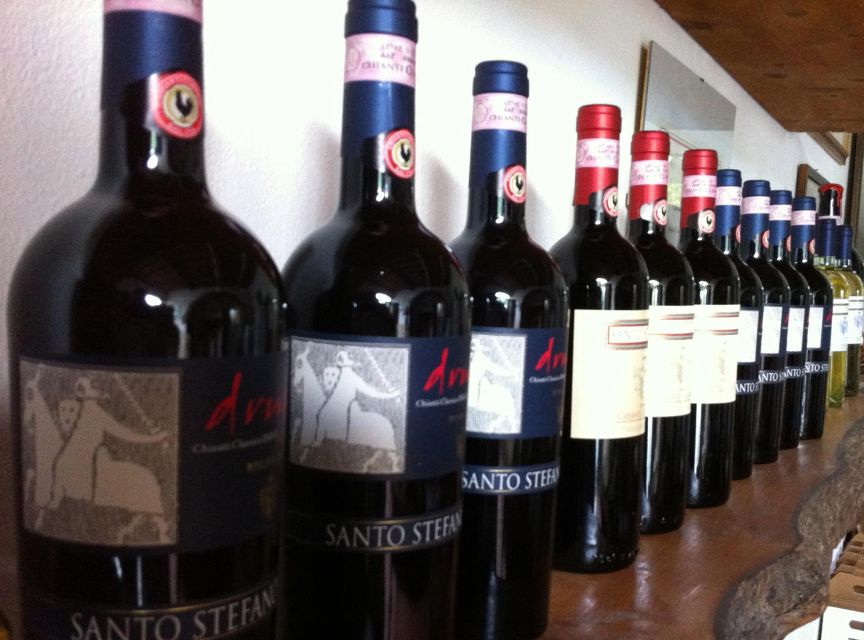
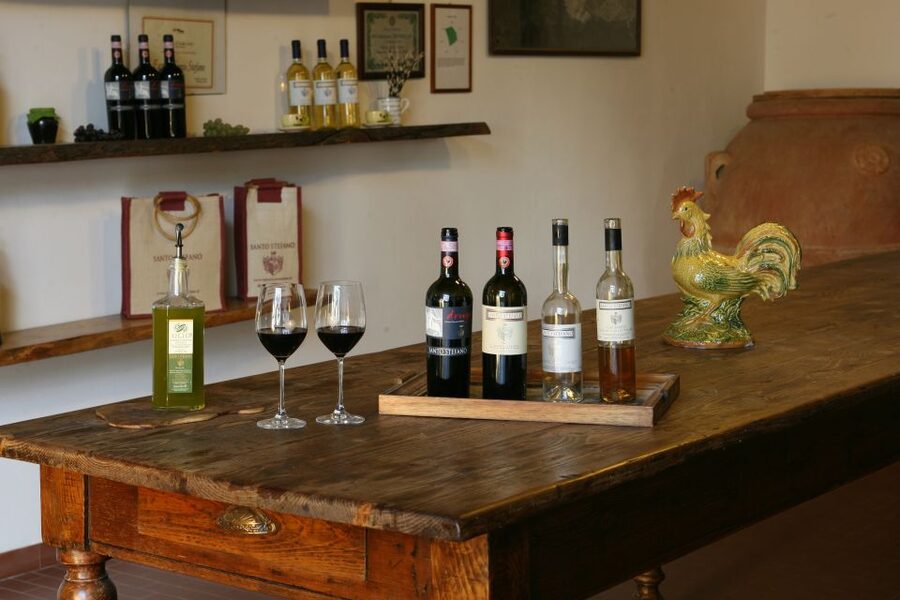
You finish in the small wine shop with the tasting. This is where the tour turns into the fun part that justifies leaving your schedule to make room for it.
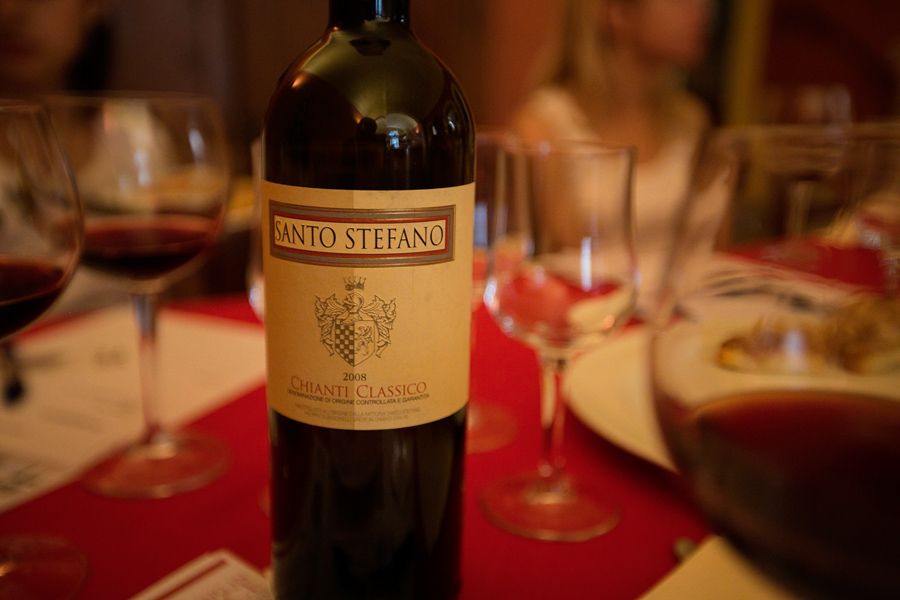
You’ll taste some excellent local wine varieties along with extra-virgin olive oil. And you’ll also get local food as part of the experience. The pairing matters because olive oil and wine don’t taste the same alone as they do next to bread, bites, and simple local flavors.
From a value perspective, I like that this isn’t just “sip three tastes and go.” In an hour, you’ll likely feel like you ate and drank enough to count as a real activity, not a quick sample.
One thing I’d do: take a breath and slow down during the oil tasting. Olive oil rewards patience. Try a small sip, then pause. Notice how it changes from first impression to aftertaste.
Price and Value for $39.86 in Chianti Country
At $39.86 per person for a 1-hour experience, you’re paying for a real working estate visit: cellar access, a live guide, and wine-and-oil tasting with local food. You’re also getting the added value of structure—tanks, oak barrels, Vinsanto barrels, and the Orciaia—so your tastings have meaning.
Could you pay less for a basic tasting in a bigger tourist shop? Sure. But the trade-off is usually depth and production context. Here, you’re paying for access to the spaces where the wine and oil are made and aged.
For me, the best value angle is this: you leave with two stories, not one. Wine production is one. Olive oil production is the other. And both get tied to what you taste.
Who Should Book This Tour (And Who Might Skip It)
This tour is ideal if you:
- want a short, high-impact wine and olive oil experience,
- like hands-on, production-based visits,
- prefer a calmer experience over a crowded tasting room,
- and enjoy asking questions because it’s a private group.
You might want to look elsewhere if you:
- want a long sit-down meal with wine pairings,
- are expecting big-brand winery views and large-scale tourism infrastructure,
- or don’t have an easy way to get to Greve in Chianti without help.
If you’re planning a day around Chianti, this is a good “anchor” stop—something you can build around.
Should You Book the Chianti and Olive Oil Tour?
I’d book it if you want an hour that actually teaches you something and still leaves you satisfied. The combination of cellar access (modern fermentation setup plus an 18th-century oak-aging room), Vinsanto context, and an Orciaia olive-oil stop is a strong mix for the time.
Before you go, do two things:
- plan your ride to Greve in Chianti since transportation isn’t included,
- wear comfortable shoes, because you’ll be moving through cellar spaces and the property.
If that fits your style, this is an easy yes.
FAQ
How long is the Chianti wine and olive oil tasting with cellar tour?
It lasts 1 hour.
What does the tour include?
The experience includes a cellar tour and a wine tasting.
Is transportation included?
No. Transportation isn’t included, though it may be available as an add-on.
Where does the tour start?
It starts at Fattoria Santo Stefano, Via Collegalle 3, 50022 Greve in Chianti.
Does the tour end somewhere else?
No. The activity ends back at the meeting point.
Is this tour private?
Yes, it’s listed as a private group.
What languages are available?
The live tour guide is available in English and Italian.
What should I wear?
Wear comfortable shoes.
FAQ
Is there free cancellation?
Yes. You can cancel up to 24 hours in advance for a full refund.