REVIEW · DOURO VALLEY
Douro Valley: A Sensory Experience in the Douro: Wines, Olive Oil, and History
Book on GetYourGuide →Operated by Quinta de Santa Júlia · Bookable on GetYourGuide
A Versailles-style garden in Portugal? That is the kind of detail that makes Quinta de Santa Júlia memorable, especially if you love French-style gardens and 200-year-old Port warehouses. I like that it is not a rushed stop on a crowded route, and you get a real sense of the family behind the wine and olive oil. One heads-up: it is built around tasting wines and olive oil, so if you dislike both, you may feel a little stuck in the schedule.
The estate has roots going back to 1596, and the visit weaves that long timeline into what you see: gardens, old country lanes, vineyards, and the working spaces where Port history comes to life. I also like the tone of the whole experience—welcoming, personal, and paced like someone actually wants you to enjoy the Douro, not just check a box.
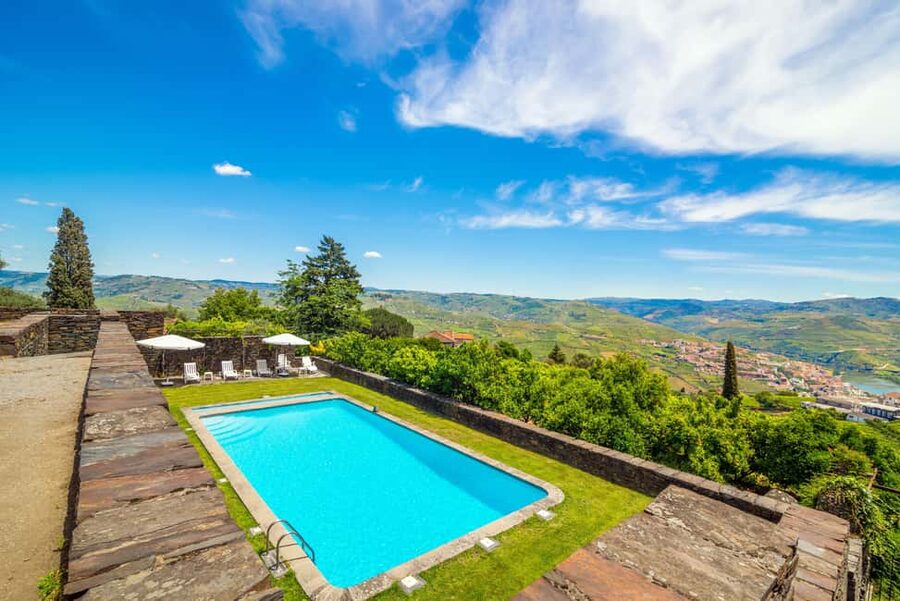
Then there is the big bonus: after the guided part ends, you can stay as long as you like. You can wander, take photos from the panoramic areas, or relax by the pool—no extra charges and no one herding you toward the exit.
In This Review
- Quick highlights that make this Douro Valley stop different
- Quinta de Santa Júlia: a family estate with roots to 1596
- The Versailles-style garden stroll: a rare twist in the Douro
- Old country lanes and estate storytelling that makes the region make sense
- Tasting day begins in the 200-year-old Port wine warehouses
- What you taste in this Douro Valley experience: wines and olive oil with identity
- DOC Douro still wines
- Port wine
- Extra virgin olive oil
- After the guided hour: vineyards, woods, gardens, and the pool
- Price and value: what $34 buys in the Douro
- Practical tips so you enjoy it more
- Who this tour is best for (and who may want a different plan)
- Should you book Quinta de Santa Júlia?
- FAQ
- How long is the tour at Quinta de Santa Júlia?
- What is included in the tasting?
- Where should I park and how do I get to the welcome area?
- Is transportation to and from the experience included?
- Can I buy the wine and olive oil on-site or ship it home?
- Are pets allowed?
Quick highlights that make this Douro Valley stop different
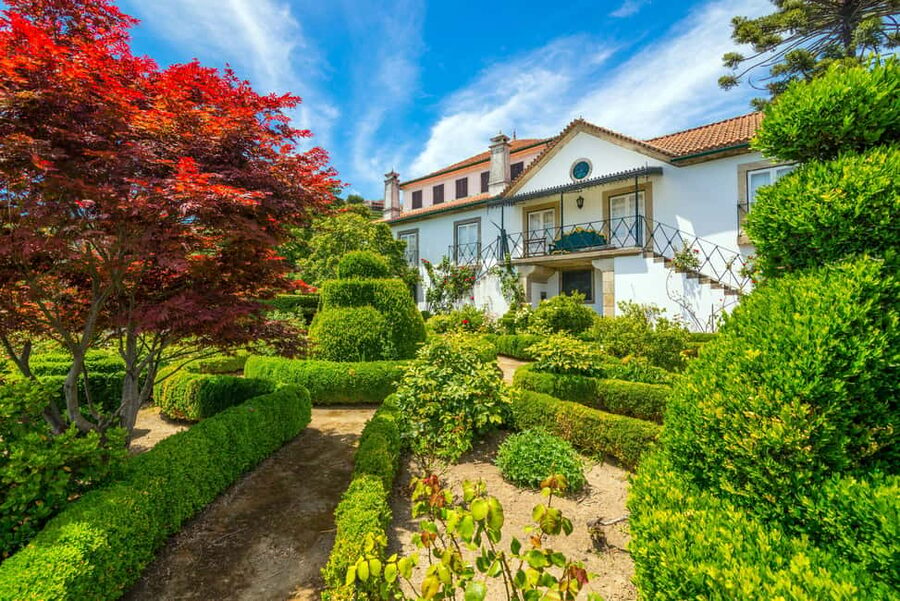
- Versailles-inspired gardens in the Douro: a French-style garden design that feels unexpected in northern Portugal.
- Stroll + story before you taste: you hear how the estate, the Douro, and Port wine history connect.
- Tasting in historic Port warehouses: you sample still and Port wines alongside extra virgin olive oil in a setting with atmosphere.
- Products you can buy on-site (or ship home): take home bottles and olive oil directly from the producer.
- Time that doesn’t feel forced: after the 1-hour visit, you can linger through vineyards, woods, gardens, and the pool.
Quinta de Santa Júlia: a family estate with roots to 1596
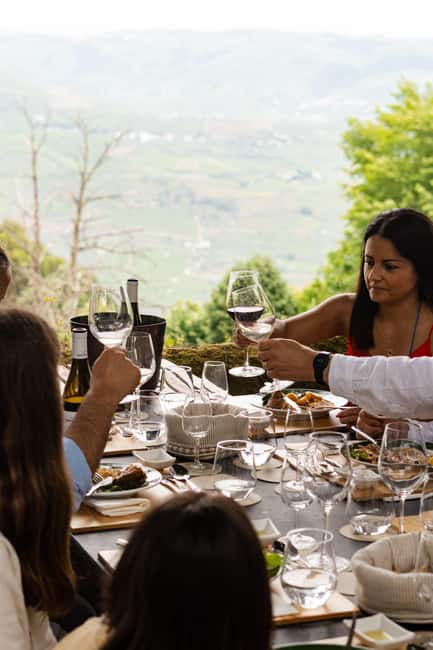
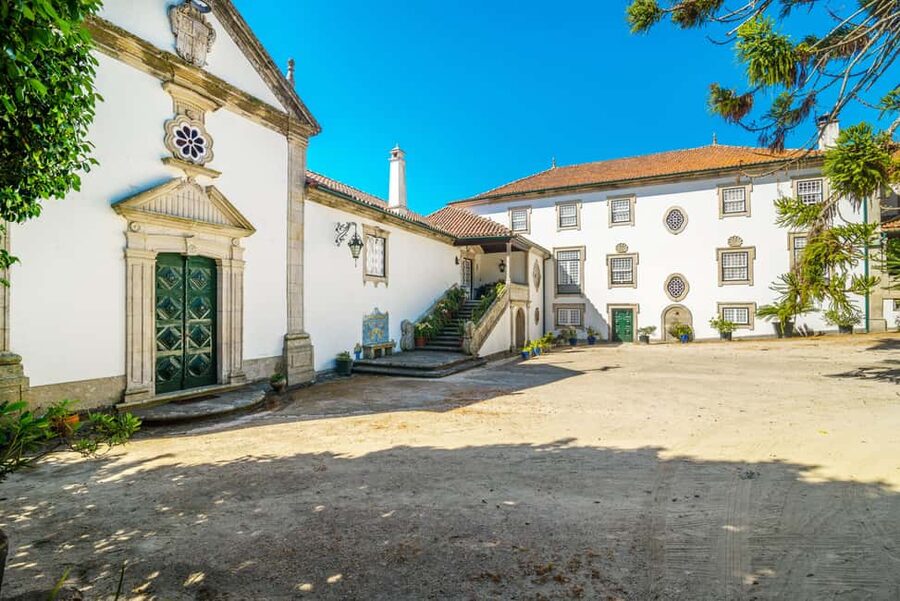
This is a Douro Valley experience where the setting does some of the talking. Quinta de Santa Júlia is a family property with origins dating back to 1596, and that matters because you can feel it in the way the visit is organized: gardens first, then the estate spaces, then the tasting in the old Port storage areas.
Instead of treating the estate like a showroom, the tour frames it like a living farm and home. You are guided through outdoor spaces and you learn the basics of how the Douro terroir shapes what ends up in the glass and on the bread.
You can also expect a truly welcoming tone. People doing the tour are part of the farm team, and the service is personalized. If you have questions, you are not brushed off with a quick answer and a route card.
The Versailles-style garden stroll: a rare twist in the Douro
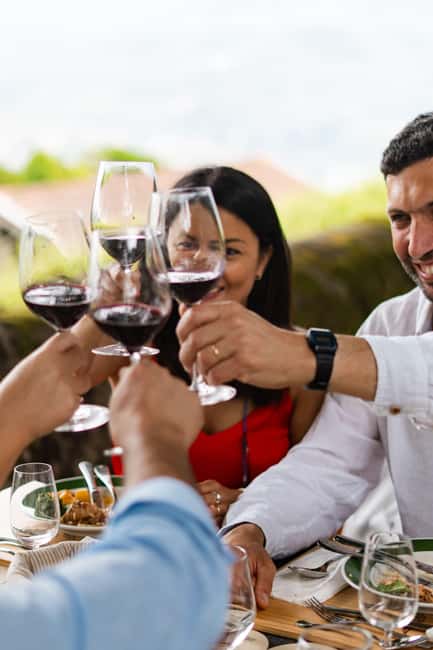
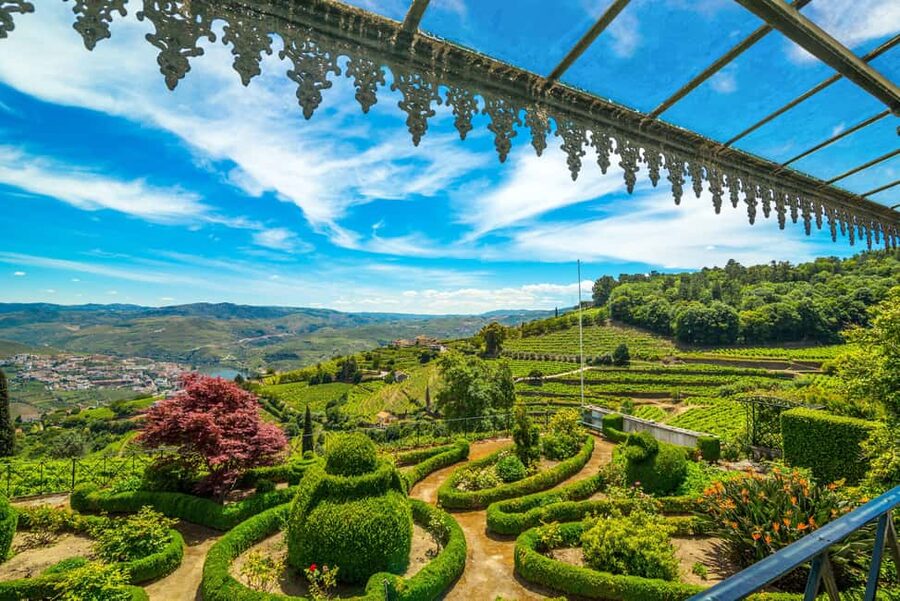
The visit begins with a stroll through the family’s private gardens. The design is French-style, inspired by classic features of Versailles, and it is the kind of detail that instantly changes how you picture this region.
Practically, you’ll want comfortable shoes. This is a walking visit through gardens and estate lanes, and even if nothing is strenuous, you’ll appreciate grip on uneven paths. The good part is that it is not a long hike—it is a guided wander that stays relaxed and scenic.
What I like most here is the contrast. You are in the Douro, a place tied to vines and stone, yet the garden style brings in a different visual language—symmetry, structure, and that curated feel. It helps you understand the estate as more than a production site. It is also a place designed for time outdoors.
Along the way, the guide shares the story of the family and how the Douro and Port wine history fit into their world. That context gives you something to hold onto when you later taste the wines and olive oil.
Old country lanes and estate storytelling that makes the region make sense
After the gardens, you continue through estate areas and old country lanes. This is where the tour’s pacing really shines. You are not just walking past things; you are getting an explanation for what you are seeing and why it matters.
The story connects three threads:
- the family property and its long roots
- the Douro region and the factors behind its character
- Port wine history as part of the estate’s identity
This is useful even if you are not a wine nerd. You do not need to memorize dates. What you need is the big picture of how place turns into flavor, and how a long-running estate builds knowledge over generations.
English is the stated language for the tour guide, and the experience is designed to be easy to follow. If you prefer a chatty vibe, you may find the guide willing to answer your questions in a straightforward way.
Tasting day begins in the 200-year-old Port wine warehouses
Then you shift from outdoors to indoors for the tasting. The tasting happens in over 200-year-old Port wine warehouses—exactly the sort of setting that makes a tasting feel grounded, not staged.
You’ll sample:
- still wines produced on the estate
- Port wine from the estate
- extra virgin olive oil from the estate
There is also traditional bread served with the tasting. That little detail helps a lot because bread gives you a neutral base and makes the olive oil and wine feel like parts of the same local rhythm, not separate products lined up for sampling.
The overall approach is guided. Instead of dumping terms at you, the guide frames what you’re tasting in a way that links back to the Douro terroir and the identity of the estate’s products.
From what I’ve seen in the way this is run, it is also friendly toward people who don’t feel confident with wine. One thing people praise is how the guide talks through flavors and history in a way that still works even if you do not start out loving wine.
What you taste in this Douro Valley experience: wines and olive oil with identity
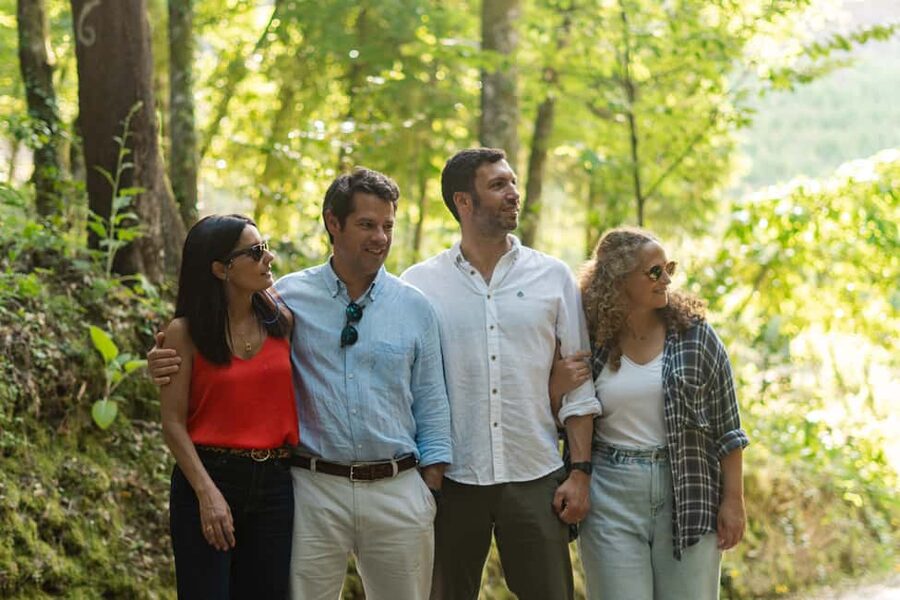
This is not a generic tasting box. The tour focuses on products made locally on the estate, with an emphasis on their Douro character.
DOC Douro still wines
You taste the estate’s own DOC Douro wines, which are built to express the Douro. In practical terms, you’ll likely notice differences in fruit character and structure. Even if you do not plan to become a sommelier, tasting allows you to understand how the region can show up in different styles.
Port wine
You also taste the estate’s Port wine. Since the tasting happens in old Port warehouses, the Port part feels more intentional than a quick pour somewhere sterile. This is where the story you heard earlier starts to click.
Extra virgin olive oil
And then there is the olive oil—extra virgin olive oil from the estate. Olive oil can be a surprise star because it is often less intimidating than wine. It also changes the way you taste everything else: you go from sips to savoring, and you end up understanding the Douro terroir in a second way.
If you like learning about how food and drink connect to a place, this pairing is a smart move. It makes the tour feel more like a farm experience than a wine lecture.
After the guided hour: vineyards, woods, gardens, and the pool
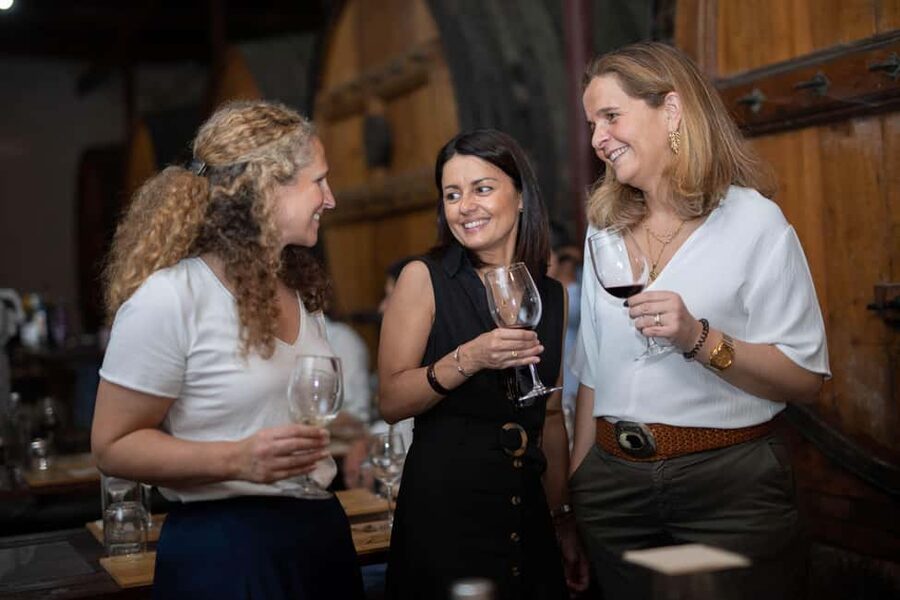
One of the best features is that you are not pushed out after the scheduled hour. The tour includes time after the visit so you can stay as long as you like.
You can wander freely through:
- vineyards
- woods
- gardens
- panoramic areas for views
- and you can relax by the pool
This is where the experience becomes more personal. If you want to take photos, you can. If you want quiet time, you can. If you want to walk again at your own pace, you can do that too.
Because you have the extra time, you can also buy products more thoughtfully. You are not stuck with a hurried purchase before the guide moves on. If you decide on wine or olive oil, you can buy on-site or request shipment to your home country.
And yes, for a trip with a 1-hour duration, this matters. The guided portion is short enough to fit a day, but the estate time can stretch into a slow, satisfying hour of your own choosing.
Price and value: what $34 buys in the Douro
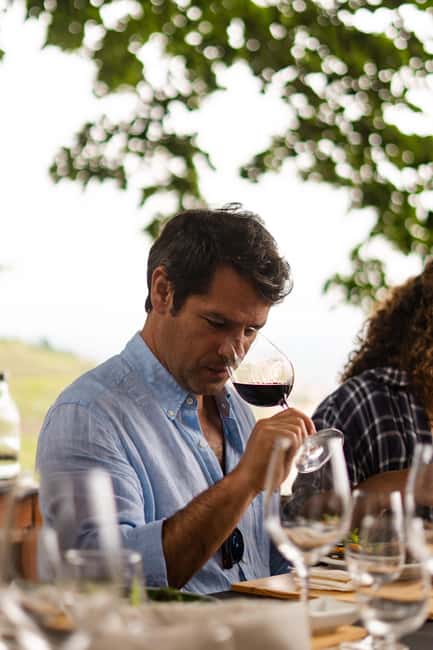
At $34 per person, this experience can feel like a bargain when you compare it to tastings that only include wine and skip the food pairing or the olive oil side.
Here’s what is included:
- the guided tour of outdoor spaces and the wine cellar area
- a garden stroll with Versailles-inspired design
- historical background of the property since 1596
- a quick look at vineyards and the olive grove
- guided tasting of the estate’s DOC Douro wines
- tasting of the estate’s Port wine
- tasting of the estate’s extra virgin olive oil
- traditional bread
- personalized service from the farm team
- access to panoramic areas
- time for photos
- free time after the visit to stroll or relax by the pool
Not included is transportation to and from the activity location, and there is no obligation to shop at the farm store. If you have to drive yourself, budget for that—and that’s also what keeps this from being a purely tour-bus experience.
Still, the value is strong because you are paying for more than pours. You are paying for context, a working-estate atmosphere, and time to linger.
Practical tips so you enjoy it more
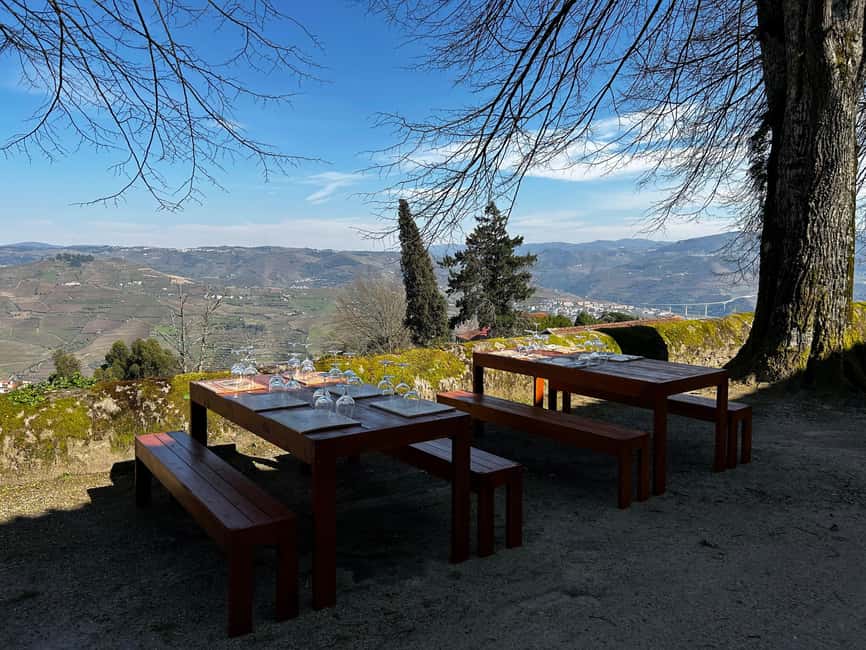
A few small things can make a difference:
- Arrive about 15 minutes early. The estate asks for it so you can ease into the start of the experience.
- Use the parking guidance. Park near the winery on the main road of the property, then walk a short path (about 1 minute) to the main house.
- Plan on comfortable walking shoes. The garden and lanes are part of the point.
- Bring a camera, but don’t rush photos. The panoramic areas and the garden design are photograph-friendly.
- If you have mobility needs, tell them in advance. The provider says they can help.
Also, pets are not allowed (assistance dogs are allowed). If you’re traveling with an animal, you’ll need a different plan.
Who this tour is best for (and who may want a different plan)
This is a great match if you want:
- a more local-feeling Douro stop away from crowds
- a guided visit that includes both wines and olive oil
- history tied to what you see, not just a lecture
- time to linger—strolling, views, and a pool break
It may not be your best fit if:
- you dislike tasting as a format (the tour is built around wine and olive oil samples)
- you want an experience with no walking at all (there is a stroll element)
- you can’t handle driving to a more off-the-beaten-track property
Should you book Quinta de Santa Júlia?
I’d book it if your Douro days need one place that feels personal and unhurried. The mix of Versailles-inspired gardens, Port-history warehouses, and an estate olive oil tasting makes the experience more balanced than the typical wine-only route.
If you’re on a tight schedule, the guided portion is only 1 hour, but the added freedom to stay makes the overall value better than the clock suggests. And if you like to take food and drink home that actually connects to where it was made, buying wine and olive oil on-site (or shipping it) is a big win.
FAQ
How long is the tour at Quinta de Santa Júlia?
The guided tour lasts 1 hour. After the visit, you can stay as long as you like to stroll, take photos, and relax by the pool.
What is included in the tasting?
You’ll taste the estate’s own DOC Douro wines, Port wine, and extra virgin olive oil. Traditional bread is served as part of the tasting.
Where should I park and how do I get to the welcome area?
Park next to the winery on the main road of the property. Then walk along a short path to the main house, which takes about 1 minute.
Is transportation to and from the experience included?
No. Transportation is not included.
Can I buy the wine and olive oil on-site or ship it home?
Yes. You can buy wine and olive oil directly on-site, or request shipment to your home country.
Are pets allowed?
Pets are not allowed. Assistance dogs are allowed.