REVIEW · VALENCIA
Johnny Madge Olive Oil Tastings
Book on GetYourGuide →Operated by Johnny Madge Olive Oil Tours · Bookable on GetYourGuide
One-hour olive oil tastings can sound slow. This one works fast because it’s guided by International Olive Oil Competition judge Johnny Madge, and you’re tasting real standout oils while he explains the rules behind the judging. I especially like how friendly and low-pressure the atmosphere feels, and I love that you sample oils chosen for quality, not just whatever a producer happens to sell.
The main drawback to keep in mind: this is a short class focused on tasting and knowledge, not a full tour of an oil mill or a long, multi-stop food experience.
In This Review
- Key highlights to know before you go
- Why Johnny Madge’s judge perspective is the real point
- La Ola Fresca in Benimaclet: what the 1-hour session feels like
- How you actually taste: biodegradable cups, smell first, then sip
- What the competition-style explanations clear up (and why you’ll care)
- The variety lesson: smelling oils from Spain and beyond
- Questions you’ll actually want answered during the tasting
- Price and value: why $23 can be a smart splurge
- Who this olive oil tasting is best for
- Should you book Johnny Madge Olive Oil Tastings?
- FAQ
- How long is the Johnny Madge Olive Oil Tasting?
- Where does the tasting take place?
- What is included in the price?
- Does the tasting include bread, and is gluten-free available?
- What languages are offered?
- Is the experience wheelchair accessible?
- Can I cancel for a refund?
- Can I reserve now and pay later?
Key highlights to know before you go
- Judge-led tasting method used in International Olive Oil Competitions, explained in plain language
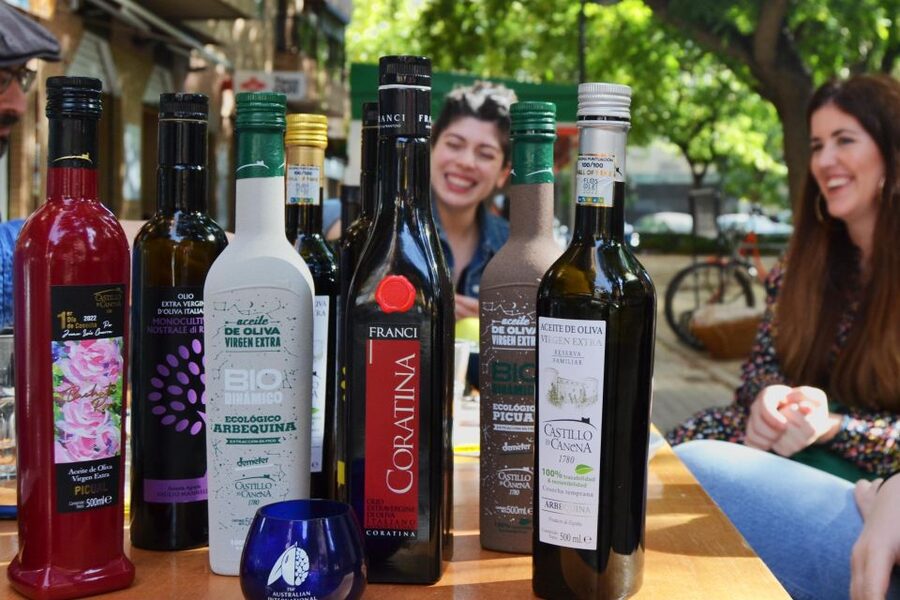
- At least 3 top oils tasted, selected by an expert rather than the producer
- Smell and taste training with special cups made of biodegradable corn
- Bread dipping optional, including gluten-free bread
- Q&A on cooking, health, and milling tech with chances to ask follow-ups
- 20 years of tastings experience, so you’re not stuck in a lecture
Why Johnny Madge’s judge perspective is the real point
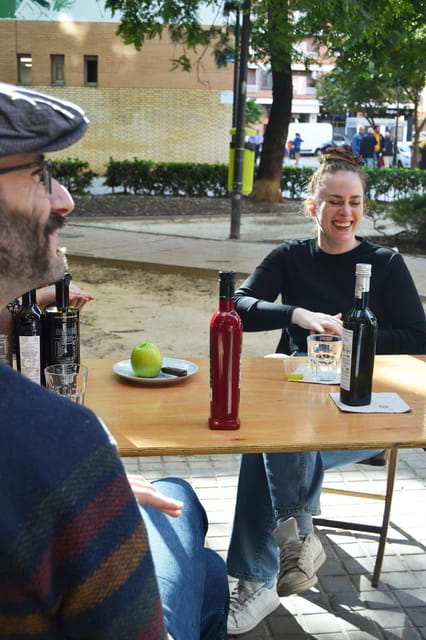
Valencia has plenty of places to buy olive oil. But most tastings miss the part that matters: how to tell good extra virgin from not-so-good extra virgin. Johnny Madge brings the competition lens. He explains why certain aromas show up, what the tasters are listening for, and how judges make comparisons in a consistent way.
That judge perspective also changes the vibe. You’re not just sipping. You’re learning a method you can reuse at home. And because Johnny holds tastings for 20 years, he’s good at pacing it so it stays fun, not fussy. People learn, but they don’t feel judged for not knowing the right words.
One more thing I appreciate: the tasting isn’t built around one producer talking up their own bottles. You’re tasting oils chosen for quality by an expert, including top oils from Spain and also other countries. That helps you understand variety, not just one style.
La Ola Fresca in Benimaclet: what the 1-hour session feels like
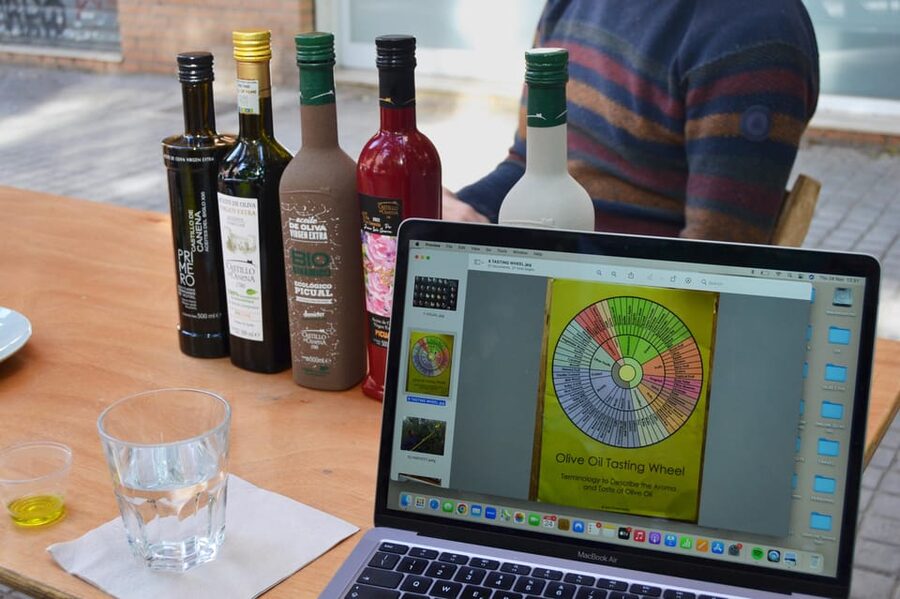
You meet in a cafe called La Ola Fresca in Benimaclet, Valencia. The sign is big and easy to spot, and it’s on a square with trees, not on a busy road for cars. That matters more than you’d think, because it keeps the start calm and lets you settle in before smelling and tasting begins.
The whole experience takes about 1 hour. Expect the time to be packed with short explanations and repeated tastings so your brain doesn’t get tired. Johnny sets it up so you can go in two directions:
- If you want the lighter, relaxed version, he keeps things clear and friendly.
- If you want the nerdy version, he can talk more about oil mills and even show photos to make the process make sense.
Also, you get water provided. If you want coffee or tea, you’ll need to pay for that separately, but you won’t be rushed into buying anything.
How you actually taste: biodegradable cups, smell first, then sip
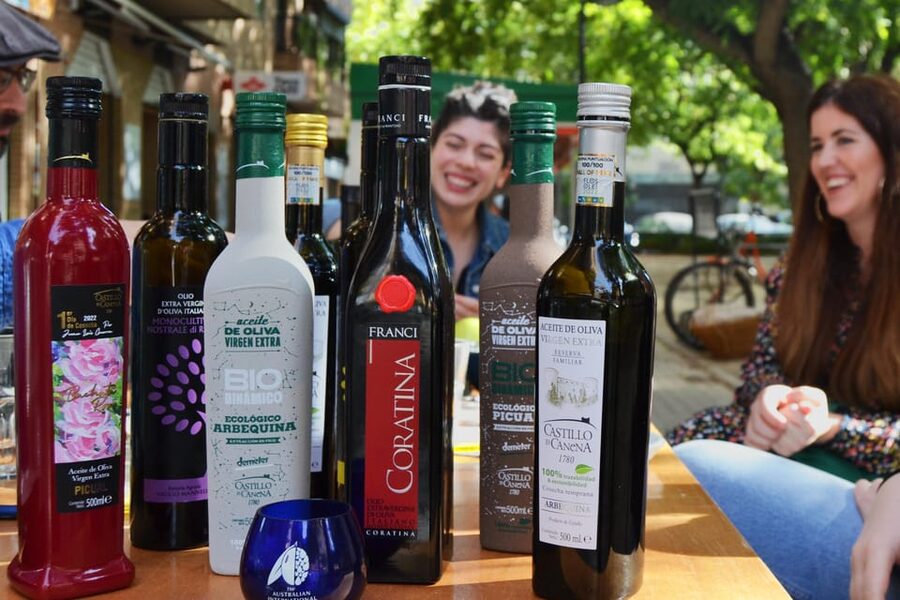
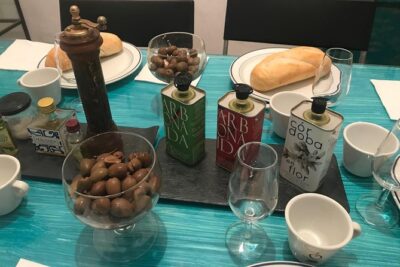
The tasting method is built on one idea: you evaluate olive oil with your senses in a specific order. You’ll smell first, using special olive oil cups made of biodegradable corn. Those cups help you focus on aroma instead of fighting with the smell of the room or the shape of a regular glass.
Then you taste. Johnny teaches you how to notice more than just flavor. You learn what different oils can smell like, and how the taste connects to those aromas. It’s not about becoming a wine critic in one hour. It’s about getting your senses “online” so you can tell the difference between fresh, well-made extra virgin and oils that don’t have the same character.
You may also be shown how to use bread properly if you choose that route. The tour includes bread for dipping if you want it, and they can do sourdough or gluten-free. Bread helps you understand how an oil behaves when it touches something neutral and absorbent. It’s a simple way to connect the tasting to real meals.
What the competition-style explanations clear up (and why you’ll care)
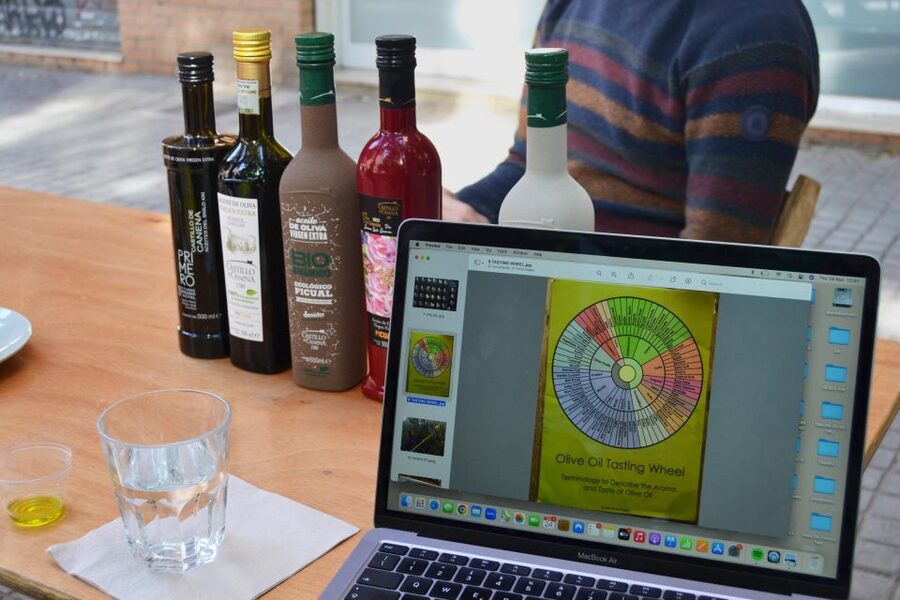
Johnny’s explanations focus on the terms people see on labels, especially extra virgin and the confusing phrase first cold pressed. These labels can sound official, but in plain life they often don’t tell you what to look for in a real taste.
Here’s what you’ll walk away understanding:
- What it means to say an oil is extra virgin and how the label relates to quality
- Why first cold pressed is not the simple magic word people assume it is
- How top-quality extra virgin gets made, from milling timing to care in handling
You also learn the other side: how bad oils can be made. That part is useful because it stops olive oil from feeling like an endless mystery. Instead, it becomes a story you can verify with your senses.
Even better, Johnny connects all this to practical food use. You don’t just learn what good oil tastes like. You learn how to use it so you actually enjoy it—whether you’re drizzling it raw, cooking with it, or pairing it with bread and simple dishes.
The variety lesson: smelling oils from Spain and beyond
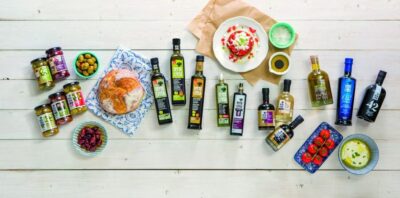
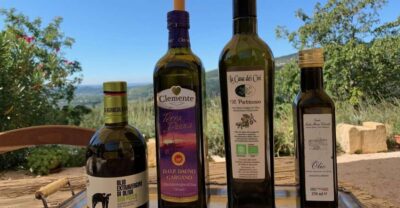
One of the most satisfying parts of the class is how quickly you realize extra virgin olive oil isn’t one flavor. Even among high-quality oils, there are differences that come through right away: aroma intensity, bitterness balance, and the way the oil finishes on your palate.
Johnny explains that the best oils he uses for tastings include Spanish producers as well as oils from other countries. That broad selection helps you stop thinking of olive oil as a single product. You start thinking of it as something with styles—each with its own “best seat” at the table.
This is also where the judging experience matters. A judge needs to compare oils fairly, not just praise one region’s style. That’s why the tasting helps you build instincts that go beyond the bottles you sampled in the class.
Questions you’ll actually want answered during the tasting
One hour can either feel like talking at you or talking with you. Johnny is set up for the second one. The class leaves room for questions, and he’ll answer things people often worry about, such as:
- Whether olive oil is better for health and why
- How to use it with food so the oil’s qualities show up
- Whether you can cook with extra virgin (you can)
- How milling technology connects to taste
And if you’re the type who likes details, you can ask about oil mills and how the process affects the final oil. If you’d rather keep it relaxed, you can skip the deep tech and still leave confident.
Price and value: why $23 can be a smart splurge
At $23 per person for about 1 hour, the price isn’t low. But it’s not random either. You’re paying for:
- A guided tasting by someone who judges at an international level
- At least three world’s best olive oils selected by an expert
- Training in tasting technique, not just sampling
If you’ve ever bought an “affordable” olive oil and wondered why it tastes flat, this class can save you money over time. Once you can identify what you’re looking for—aroma, balance, freshness—you’re less likely to keep guessing.
Also, Johnny’s teaching style helps. People describe it as feeling less like a client experience and more like being welcomed. That matters because it makes you more willing to ask questions and slow down for the senses part.
Bottom line: it’s a good value if you want to get better fast, not just buy souvenirs.
Who this olive oil tasting is best for
This tasting works well if you’re in Valencia and want a food experience that feels real and useful. It’s also a great fit if you like hands-on learning with humor and clarity.
You’ll probably enjoy it most if you:
- Want to understand olive oil labels without getting lost in jargon
- Enjoy food tastings but hate long lectures
- Plan to eat a lot of bread and simple dishes and want the oil to taste better
- Like asking questions, from health to cooking to milling
It’s also accessible in practical ways. The session is offered in English, Italian, French, and Spanish, and it’s wheelchair accessible.
Should you book Johnny Madge Olive Oil Tastings?
Yes, if you want a sharp way to learn what makes extra virgin taste excellent. This is the kind of experience that gives you a method you can use again, whether you’re buying oil in Valencia or trying to make sense of labels back home.
Skip it only if you’re looking for a long, multi-stop food tour or a visit to production facilities. This is focused on tasting and explanation at a cafe, and it stays within that one-hour frame.
If you do book, come ready to smell first and ask questions second. Johnny makes it easy to feel at ease, and you’ll get more out of it when you treat the session like learning a new skill, not like buying something at the end.
FAQ
How long is the Johnny Madge Olive Oil Tasting?
The class lasts about 1 hour.
Where does the tasting take place?
It takes place at a cafe called La Ola Fresca in Benimaclet, Valencia. The sign outside is big and visible, and it’s on a square full of trees.
What is included in the price?
You get a tasting of at least 3 world’s best olive oils, with explanations of the competition-style techniques. Water is provided, and bread is available if you want to dip it in the oil.
Does the tasting include bread, and is gluten-free available?
Yes. If you want bread for dipping, they offer locally used bread and can provide sourdough or gluten-free options.
What languages are offered?
The live guide provides the class in English, Italian, French, and Spanish.
Is the experience wheelchair accessible?
Yes, it is listed as wheelchair accessible.
Can I cancel for a refund?
Yes. You can cancel up to 24 hours in advance for a full refund.
Can I reserve now and pay later?
Yes. You can reserve your spot and pay nothing today.