REVIEW · TIRANA
Tirana Walking Tour, Extra Virgin Olive Oil and Raki Tasting
Book on Viator →Operated by Experience Albania like a Local · Bookable on Viator
Tirana tastes better on foot. This walking tour strings together major landmarks like Skanderbeg Square and the Enver Hoxha Pyramid, plus an included extra-virgin olive oil and raki tasting. I also like the way the guide connects what you see to what the city went through, so you don’t just collect photos—you understand the place.
I’m a big fan of the small-group feel (max 30 people) and the relaxed pacing. You’ll cover enough ground to orient yourself fast, while still having time at each stop to ask questions and catch details you’d miss on your own.
One thing to keep in mind: it’s an outdoors walking experience and depends on good weather, so pack for sun and sudden showers.
In This Review
- Quick hits before you go
- Start at Skanderbeg Square, Then Watch Tirana Change in Real Time
- Murat Toptani Pedestrian Street: The City’s Timeline in One Walk
- Tirana Castle Area: Free Entry, Big Orientation Value
- Blloku: From Restricted Communism to the Hangout District
- Enver Hoxha Pyramid: A Monument That Keeps Rewriting Its Meaning
- Olive Oil and Raki Tasting: The Stop That Converts Knowledge Into Taste
- Price and Timing: What You Really Get for $22.69
- Who Should Book This Tirana Walk (and Who Might Skip It)
- Should You Book This Tirana Walking Tour and Tasting?
- FAQ
- How long is the Tirana Walking Tour with olive oil and raki tasting?
- What language is the tour offered in?
- What’s included in the price?
- Where does the tour start and end?
- Are there admission fees for the sights on the route?
- What is the cancellation policy?
Quick hits before you go
- Olive oil and raki tasting included: different extra-virgin oils plus raki options like blackberry and plum
- A compact, high-impact route: Skanderbeg Square, Castle area, Blloku, and the Pyramid in about 2–3 hours
- English speaking guide: learn more from the guide than from a guidebook in plain language
- Free entry noted for key stops: the itinerary lists multiple stops as free to enter
- Easy start point: meet at the equestrian statue of Skanderbeg in Sheshi Skënderbej
Start at Skanderbeg Square, Then Watch Tirana Change in Real Time
Your tour begins at the equestrian statue of Skanderbeg in Sheshi Skënderbej. This is the kind of place where Tirana’s layers show right away: it sits near the center of old-world planning, then gets reshaped through different eras.
The square itself has an interesting story about shifting statues and symbols. You’ll hear how it evolved over time and what ended up remaining—useful context because many visitors walk past these monuments without knowing why they look the way they do today. Even if you’re not a “monument person,” this stop helps you read the rest of the route.
From there, you’ll move toward the Tirana Clock Tower, one of the older structures in town from late Ottoman times, completed in 1822. The tour doesn’t treat it like a random photo stop. It’s framed as part of the city’s timeline—why certain buildings survived while others were replaced or repurposed.
Practical tip: this part starts in an urban core, so it can feel busier and brighter. If you’re heat-sensitive, bring water and plan to slow down at the first few stops.
You can also read our reviews of more tours and experiences in Tirana.
Murat Toptani Pedestrian Street: The City’s Timeline in One Walk
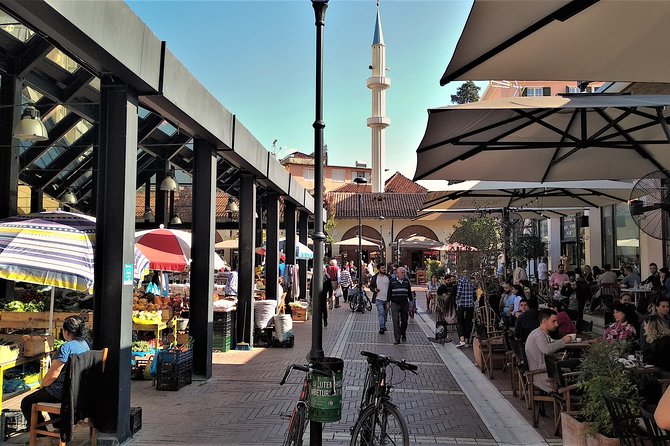
One of the most rewarding segments is the pedestrian Murat Toptani route. This isn’t just a nice walking street—it works like a guided museum corridor. You’ll follow a path that connects major landmarks and historic functions that shaped modern Tirana.
Here’s what makes this stretch worth your time:
- You pass the Fortress of Tirana area (Kalaja e Tiranes), which helps you understand why the city’s defensive and cultural spaces grew where they did.
- You’ll also hear about institutional buildings like the Academy of Sciences headquarters.
- The route includes references to a park that’s described as the country’s first national park, which adds a “green space history” angle, not just architecture.
- You’ll get pointers around the old National Library and the former Political Persecutor’s Building, with Tanners Bridge mentioned at the end of the walk.
And you’ll still see modern cultural destinations on the same corridor, like the National Gallery of Arts and the Residence of the Albanian Royal Family. That mix is the point: Tirana doesn’t separate eras into neat compartments. It stacks them, reuses them, and keeps moving.
Small caution: because this is a walking-heavy section with several points of interest, you’ll feel it more if you’re carrying a lot of stuff. Wear comfortable shoes and keep your phone accessible for quick reference.
Tirana Castle Area: Free Entry, Big Orientation Value
Next comes Tirana Castle, known as Kalaja e Tiranës, in the Toptani pedestrian area. The itinerary flags it as a free admission stop, which matters because it lets you spend time looking instead of calculating costs for each viewpoint.
This stop is one of the best places to get your bearings. Even in a short window, it helps you connect the streets below to the broader layout of the city above. If you’re visiting Tirana for the first time, I think this is the moment when everything starts to click: you understand where you are, and how the walk connects to bigger geographic ideas.
Time-wise, you’re not stuck for long here. Expect roughly 15 minutes at the castle area, enough for a viewpoint, a few photos, and the guide’s narration. Don’t rush it—use the time to ask one good question about how the city’s European-style planning came to be part of this landscape.
Blloku: From Restricted Communism to the Hangout District
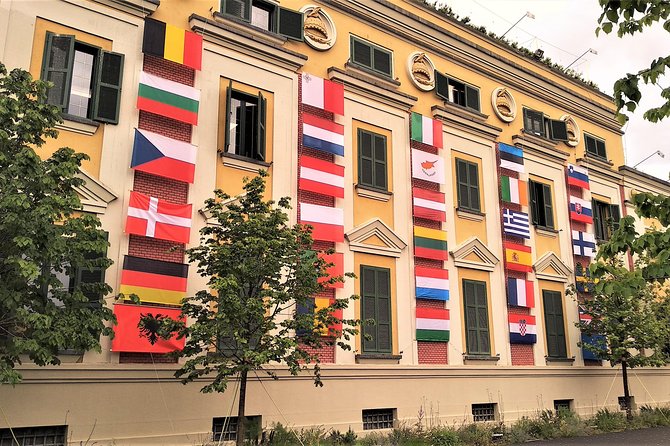
Then you’ll head to Blloku, formally Ish-Blloku. It’s known as an upmarket entertainment area today, filled with shops, restaurants, cafes, and nightlife. But the tour’s strength is that it doesn’t treat Blloku like just another modern neighborhood.
You’ll learn why it became attractive after the fall of communism in Albania. During the communist period, Blloku was a restricted residential area for members of the Albanian politburo, and ordinary people weren’t allowed there. That context changes how you read the neighborhood now. The streets aren’t just lively—they’re a symbol of who had access, and who didn’t.
You’ll also hear about Enver Hoxha’s residence still being found in Blloku, tying this “fun district” back to the heavy political past the city carried.
How to get the most out of this stop: treat it like a perspective check. Look around and notice what’s changed—then ask yourself what stayed. That’s usually the moment the tour feels most meaningful.
Enver Hoxha Pyramid: A Monument That Keeps Rewriting Its Meaning
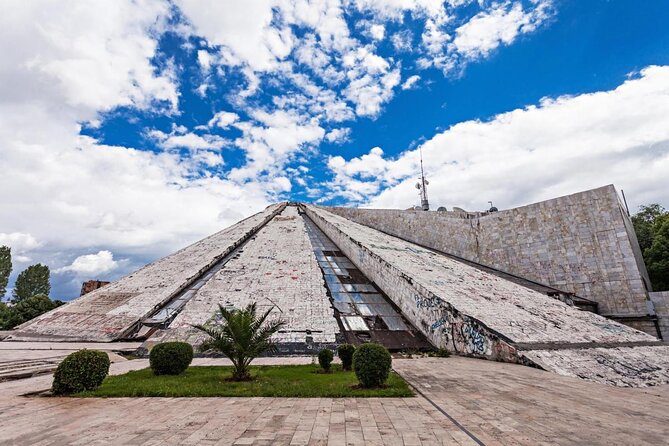
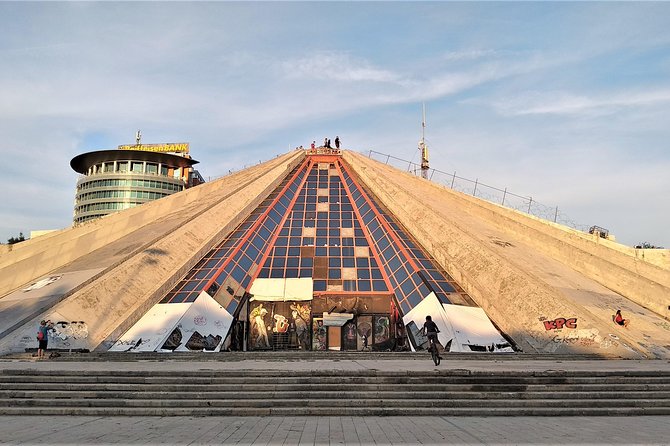
One of the final stops is the Enver Hoxha Pyramid. It was inaugurated in 1988 and served as the Enver Hoxha museum until 1991. The building’s shape is described as resembling an Egyptian pyramid, but from above it forms a communist star pattern.
That contrast—Egyptian-inspired shape paired with a communist icon—is exactly why this stop works. The guide helps you see it as architecture with propaganda intent, then as a modern curiosity afterward. The itinerary also hints that renewed construction has brought surprises, so it’s not just a relic. It’s a living part of Tirana’s current identity.
You’ll spend about 15 minutes here. In that short time, you can still get a lot: what the pyramid was meant to communicate, how symbolism functions in public buildings, and why the city chose to keep it in view.
Practical note: this is another outdoor stop, so keep an eye on shade. If the weather is hot or windy, you’ll appreciate pausing more than rushing.
Olive Oil and Raki Tasting: The Stop That Converts Knowledge Into Taste
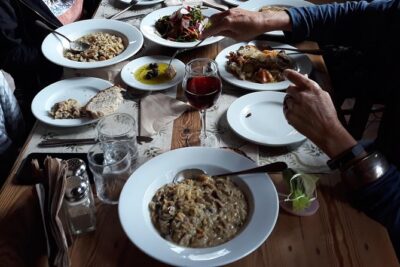
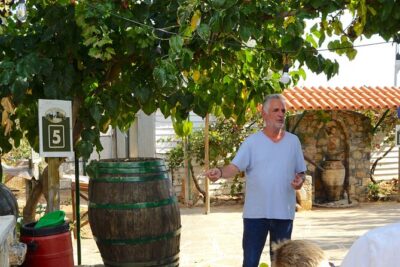
The experience includes a tasting of extra-virgin olive oils and different raki distillates. Raki might be distilled from ingredients like blackberries and plums, so expect flavors beyond the basic idea of clear spirits.
This tasting isn’t an add-on. It’s a smart way to anchor the history and culture you just walked through. Olive oil and raki are part of everyday life in Albania, and tasting them turns the tour from “see and hear” into “taste and remember.”
Why this is good value for the money: many city tours charge extra for food and drinks. Here, the tasting is included. At around $22.69 per person, you’re basically paying for (1) a guided route across major sights and (2) a cultural tasting built into the flow.
What to do during the tasting: go slow. Olive oil can be easy to drink without noticing differences, but you’ll get more from it if you pay attention to the smell and the finish. For the raki, treat it like a flavor test. Small sips let you notice fruit notes and intensity rather than chasing the alcohol.
Also remember: snacks, meals, and drinks are excluded beyond what’s listed as included, so don’t plan this as your full food plan for the day. If you want a longer lunch afterward, ask your guide for nearby options.
Price and Timing: What You Really Get for $22.69
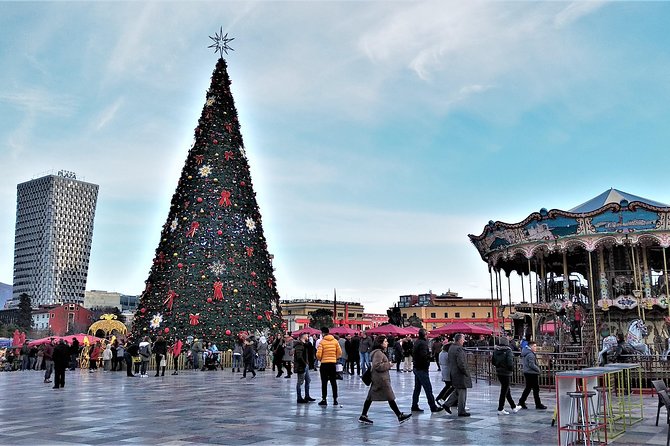
The price is listed at $22.69 per person, with a duration of about 2 to 3 hours. That timing is a sweet spot. You get enough time to cover the main central sights without losing your whole day to walking.
This tour also notes:
- Mobile ticket use
- English offered
- A maximum group size of 30
- Admission tickets marked as free for the itinerary stops
Those details matter. Free entries reduce friction, and a small-group size helps you actually hear the guide rather than just standing near the back. The downside is that you’ll still be in a group setting. If you want true one-on-one attention, you should confirm how private it is for your exact booking.
If you’re planning other activities the same day, this works well as a “morning orientation” or early afternoon reset. You’ll walk with context, then use it later when you explore on your own.
Who Should Book This Tirana Walk (and Who Might Skip It)
This is a strong pick if you:
- Want an organized route through Tirana’s key landmarks without mapping the city yourself
- Like history told in human terms—how buildings and neighborhoods changed over time
- Enjoy cultural tasting experiences as part of sightseeing
- Prefer a guided walk that stays flexible at a comfortable pace
You might pass if:
- You hate walking outdoors or you can’t handle weather changes
- You want a long, slow museum-style visit rather than a compact 2–3 hour circuit
- You’re expecting lots of food beyond the tasting itself (snacks and meals aren’t included)
Also, take note of guide quality. One of the guides mentioned in feedback is Taulant, praised for being engaging and passionate, and for sharing personal Albanian history context plus local recommendations. If you’re hoping for more than facts on a clipboard, you’ll likely appreciate that style.
Should You Book This Tirana Walking Tour and Tasting?
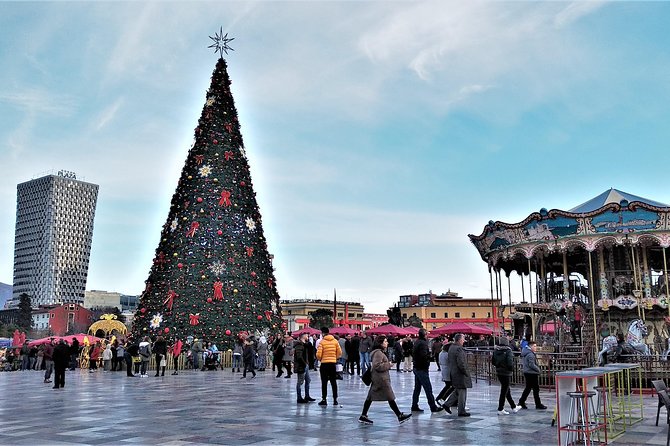
I’d book it if you want a first-time-friendly way to understand Tirana fast—then make it memorable with an included olive oil and raki tasting. The route hits a balanced mix of political landmarks, architectural spots, and a neighborhood that changed after communism, and it does it in a manageable 2–3 hours.
Just plan around the weather and wear good shoes. If you’re booking on a day that looks iffy, consider having a backup plan for indoor time nearby.
If you want to feel oriented, fed a little (through tasting), and better able to read the city’s symbols on your own, this is a solid choice.
FAQ
How long is the Tirana Walking Tour with olive oil and raki tasting?
The tour runs about 2 to 3 hours.
What language is the tour offered in?
The tour is offered in English.
What’s included in the price?
A professional certified guide and an extra-virgin olive oil and raki tasting are included.
Where does the tour start and end?
It starts at the equestrian statue of Skanderbeg in Sheshi Skënderbej, Tirana, and ends back at the meeting point.
Are there admission fees for the sights on the route?
The itinerary lists admission tickets as free for the stops described.
What is the cancellation policy?
Free cancellation is available. You can cancel up to 24 hours in advance for a full refund. If it’s canceled due to poor weather, you’ll be offered a different date or a full refund.