REVIEW · CROATIA
Zadar Olive Oil & Wine with Dalmatian Views & History
Book on GetYourGuide →Operated by Dalmatia Oil · Bookable on GetYourGuide
Olive oil, wine, and views in one day.
This Zadar day trip takes you inland for Dalmatian history, then into a family olive grove and mill for hands-on tasting, and ends high above Lake Vrana with big Kornati Islands panoramas.
I especially like the structure: you get practical training to taste olive oil like a pro (5 oils, aroma and balance tips), not just a quick sample. I also like the human side—chatting with the family behind the mill and learning how the land shapes the flavor. One caution: the route packs in multiple stops with short photo breaks, so if you want lots of time to wander at your own pace, you may feel slightly rushed.
In This Review
- Key things I’d circle on your map
- Zadar’s hinterland: why this day trip feels more than food
- Meeting point and the small-group setup that makes it enjoyable
- Tank memorial and Benkovac: history stops that don’t feel like homework
- Uljara Lepur olive grove and mill: from trees to award-winning oil
- The tasting lesson: 5 oils, aroma, balance, and what to look for
- Lunch under the trees: how the food fits the tastings
- Kamenjak Nature Park: Lake Vrana and the Kornati Islands payoff
- Value for $64: what you’re really paying for
- Who this tour fits best (and who should think twice)
- Quick tips to get the most from the day
- Should you book this Zadar olive oil and wine day trip?
- FAQ
- What’s the meeting point in Zadar?
- How big is the group and how do you travel?
- What tastings are included?
- Is there lunch during the tour?
- How long is the experience?
- Is the tour guided in English?
- Can I buy olive oil or wine during the day?
- End of review
Key things I’d circle on your map
- 5 award-winning olive oils plus a guided tasting lesson for reading aromas and balance
- Uljara Lepur olive grove and mill visit, with a walk through the trees and how the oil gets made
- Operation Leap tank memorial stop for context on Croatia’s independence struggle
- Kamenjak Nature Park viewpoint high above Lake Vrana, with views toward the Kornati Islands
- A small group up to 8 people, in an air-conditioned minibus, with room for questions
Zadar’s hinterland: why this day trip feels more than food
If your Zadar days usually mean the coast, this tour flips the script. You leave the sea behind and go into the hinterland, where the story is built from land use, local ingredients, and centuries of shifting borders.
What makes the day work is that it connects taste to place. You’re not just sampling oils and wines; you’re being shown how the climate, soil, and tradition influence what ends up in your glass. And because the last stop is perched above Lake Vrana, you also end with the kind of view that makes the whole day click.
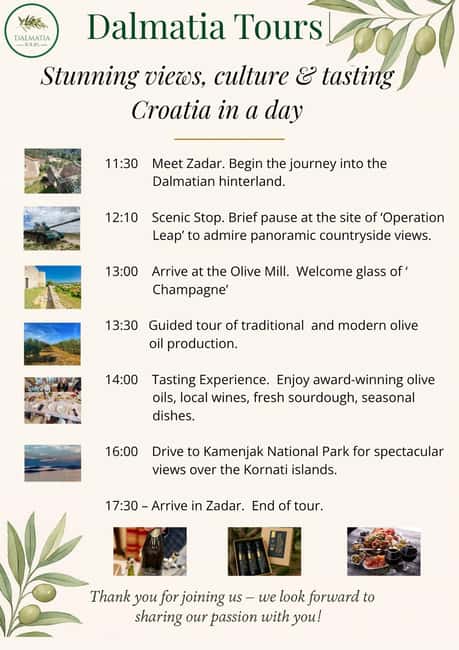
The timing matters too. You start at 11:30 and finish back at the Zadar central bus station around 17:30, with a comfortable rhythm: drive, learn, taste, eat, then look out over the islands.
Meeting point and the small-group setup that makes it enjoyable
You meet at the parking area of Zadar’s main central bus station (Autobusni kolodvor Zadar), close to McDonald’s. Your bus has an olive oil advertising board on the side, and the plan is to depart promptly once everyone’s onboard.
This is a small group tour (max 8 people) and you travel by air-conditioned minibus. That size is a big deal here because the experience depends on conversation—asking questions, hearing explanations in English, and getting time at the tasting table rather than standing in a line.
Your guide is an English-speaking storyteller. In one common lead (Neil), the vibe is humor with clear answers, plus enough breathing room that you can ask follow-ups instead of being rushed through facts.
Tank memorial and Benkovac: history stops that don’t feel like homework
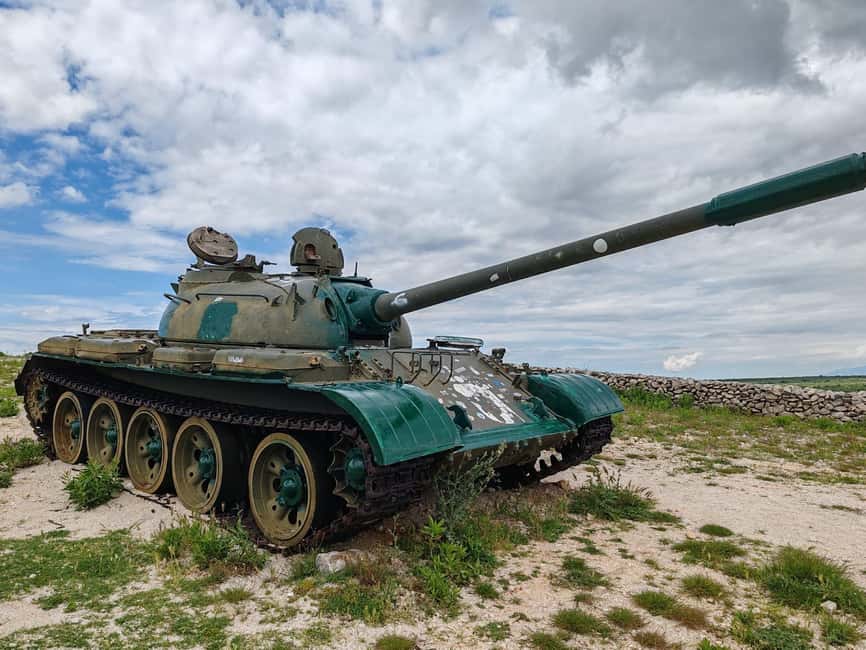
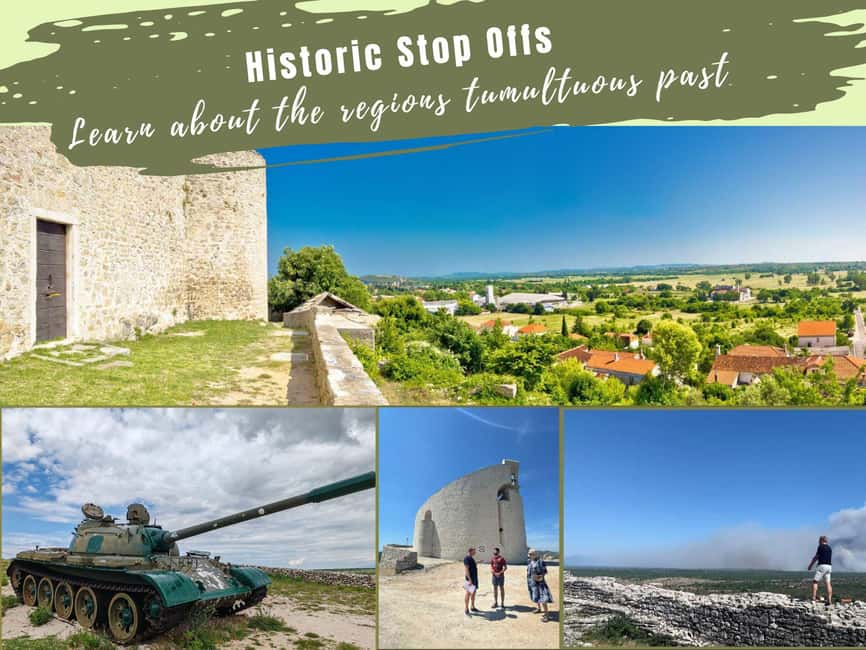
One of the best parts of this itinerary is how it handles history. Early on, you stop at a tank memorial from Operation Leap. It’s a heavy subject, but the context is practical: it helps you understand why this frontier between coast and hinterland mattered, and how centuries of power shifts shaped the region you’re visiting.
After that, the day keeps moving with guided context in Benkovac. You get a guided segment plus time to do some exploring on your own. That mix helps. You’re given the thread to follow, then you can decide how long to linger—especially useful when a town center is less about one big site and more about atmosphere and small details.
There are also brief photo stops along the way. Some will be quick, but they’re timed for views and orientation, which matters because once you reach the olive areas and the Kamenjak viewpoints, you’ll want to know what you’re looking at.
Uljara Lepur olive grove and mill: from trees to award-winning oil
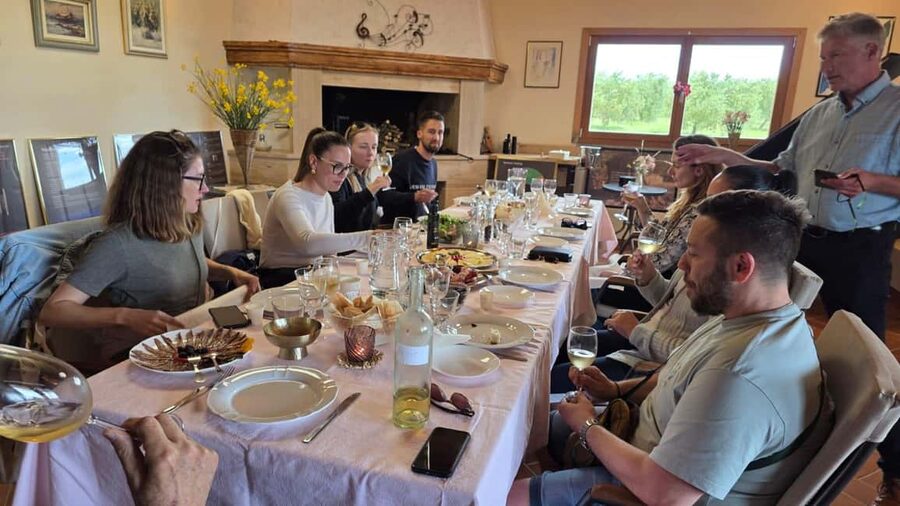
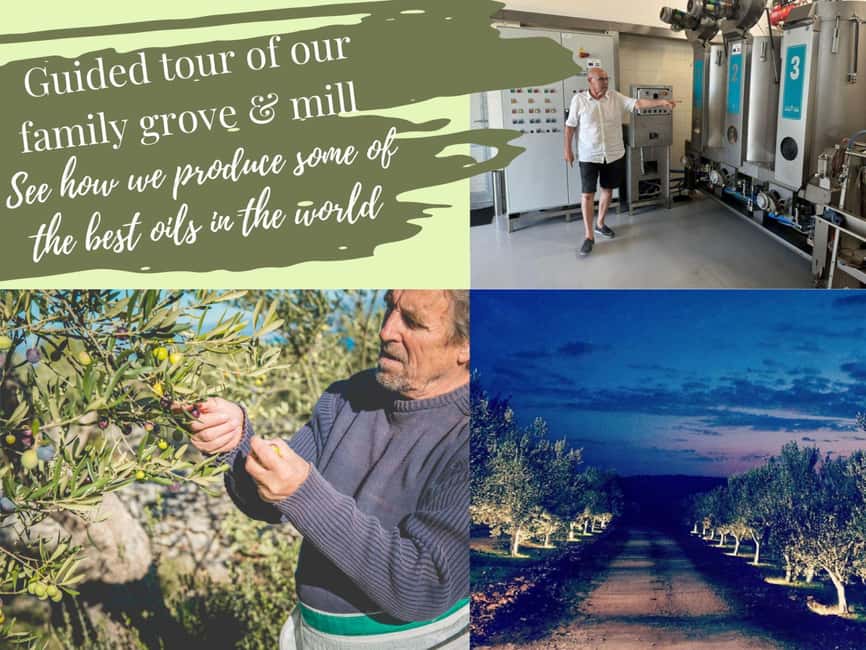
The olive grove and mill visit is the heart of the day. At Uljara Lepur, you do a guided visit and a walk through the olive trees, then move into tasting mode.
A welcome glass of local sparkling wine is part of the experience—Dalmatian “champagne” style—served before you start wandering the grove. I like that order. Starting with bubbles keeps your palate alert, and it sets a festive tone for what’s otherwise a very hands-on, serious craft.
In the grove, the explanations connect directly to what you’ll taste later. You learn why the local growing conditions matter and how tradition affects the final flavor profile. Then, at the mill, you get to see how award-winning oils are made, not just that they taste good.
One useful detail: you’re not asked to memorize jargon. You’re taught what to pay attention to—what aromas you might notice, and what balance means when you’re tasting extra virgin olive oil.
The tasting lesson: 5 oils, aroma, balance, and what to look for
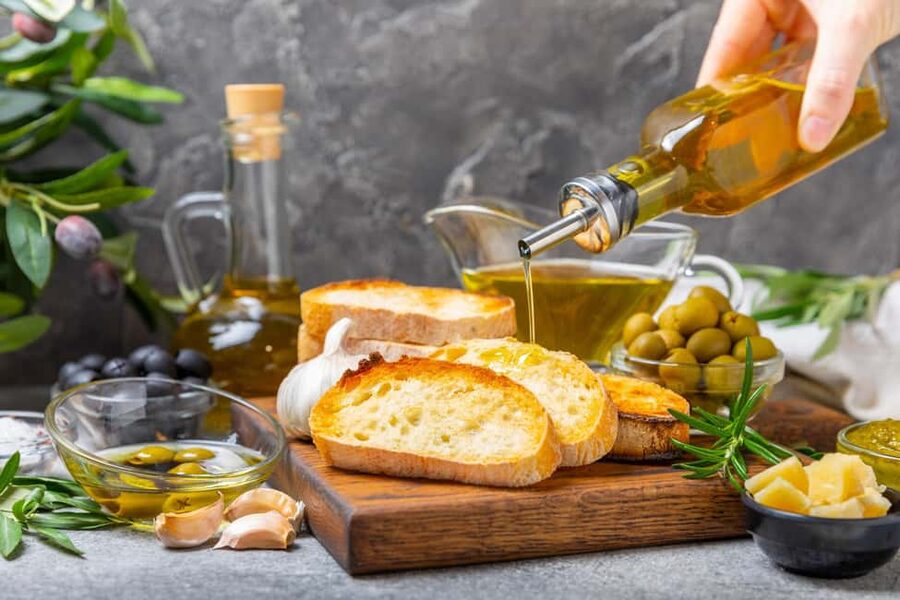
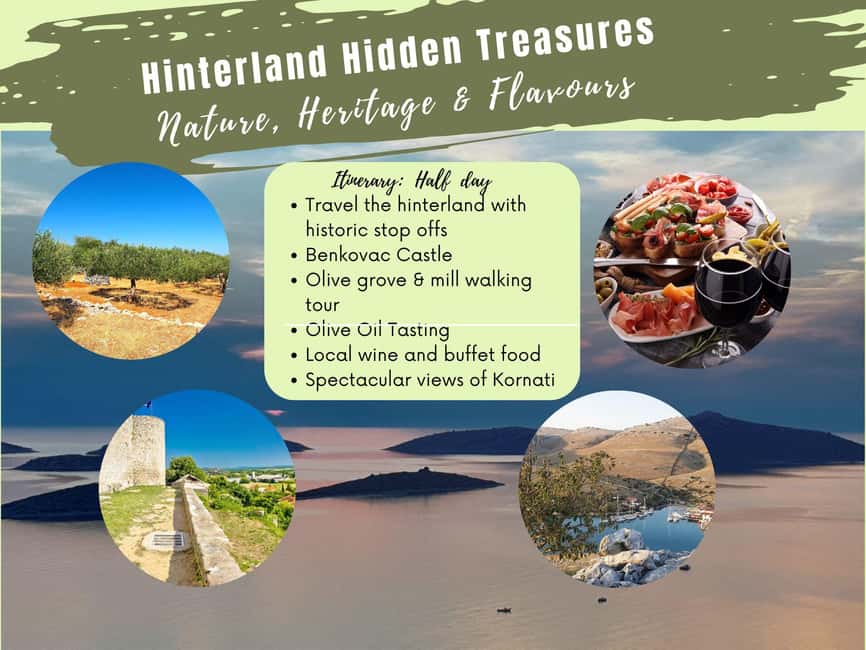
Here’s where this tour earns its keep. You’re tasting 5 olive oils, described as a combination of award-winning oils, and you get oil tasting tuition.
The goal isn’t to turn you into a judge. It’s to help you recognize differences. You’ll learn how to approach smell first, then taste, then finish. The guide focuses on aroma and balance—so you can start connecting what you’re tasting to the way the oil was produced and the characteristics of the olives.
That matters for two reasons.
First, it makes the experience feel interactive. You’re actively learning during the day, instead of sitting through a monologue while you wait for lunch.
Second, it changes what you buy afterward. The tour notes that you can purchase oils and wine to take away, and once you’ve tasted and compared, you’re more likely to choose based on your preferences, not just the label.
Then come the wines.
You do a Croatian wine tasting featuring the local “champagne” plus additional native grape wines: 1 red and 2 white wines. The native variety focus is helpful. It nudges you away from the idea that all wine in Croatia tastes the same, and it reinforces the theme of land and tradition shaping flavor.
Lunch under the trees: how the food fits the tastings
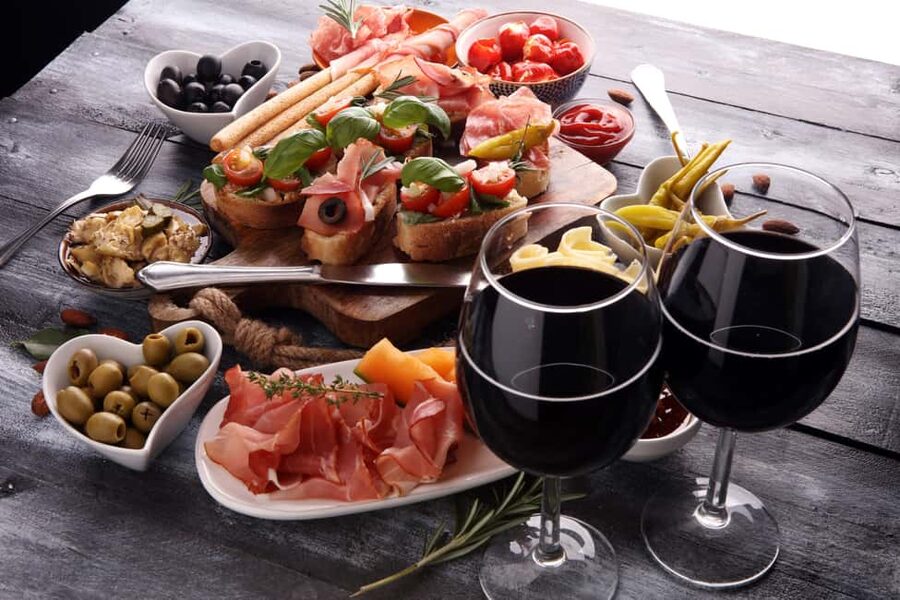
You get a dedicated lunch slot—about 30 minutes—and the day is described as a traditional Dalmatian lunch of seasonal regional dishes. The key is that it’s meant to be paired with what you’ve learned and tasted, with dishes drizzled in the better oils and served with your choice of wine.
You also get light snacks to complement the tasting earlier in the day. This pacing is smart. Olive oil tasting can feel overwhelming if you go in hungry, and wine tastings can feel sharper if you go in too full. The tour’s snack-and-tasting rhythm helps you enjoy everything without feeling like you’re being stuffed.
One thing to watch: a full buffet lunch option is listed as not included (20€). If you like a bigger selection and want a relaxed lunch format, that buffet is the kind of add-on that fits some travel styles. If you’re the type who’d rather keep costs predictable, stick with what’s provided in the lunch portion of the experience.
Kamenjak Nature Park: Lake Vrana and the Kornati Islands payoff
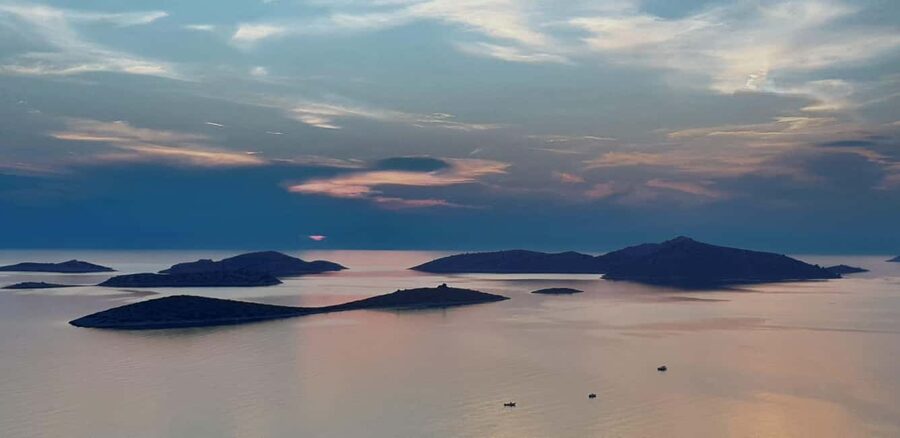
The final stop is Kamenjak Nature Park, perched high above Lake Vrana. This part isn’t about food or history. It’s about reward—seeing the region from the vantage points you’ve been learning about all day.
The route includes a viewpoint stop at Vidikovac/Kamenjak, with time for sightseeing, a walk, and a sunset-style element. Even if you don’t catch the sky in peak color, the geography is the point: you can see across vineyards and olive groves and out toward the Kornati Islands.
This matters because it ties the earlier stops together. After learning about the hinterland and tasting local products, the view gives you the big-picture understanding of why this area grows olives and grapes the way it does.
It’s also a good moment to slow down. The day has motion and lessons, and here you’re allowed to just look.
Value for $64: what you’re really paying for
At $64 per person, this isn’t an impulse purchase—but the pricing makes sense once you price out the pieces.
You’re getting:
- transport by air-conditioned minibus from Zadar and back
- multiple guided stops tied to history and context
- an olive grove and mill experience (not just a quick roadside tastings stop)
- 5 olive oil tastings with tuition
- wine tasting with 3 wines (the local sparkling style plus 1 red and 2 white)
- light snacks and a lunch portion
If you’ve done tastings before, you know many “food tours” focus on quantity but not learning. Here, the instruction is part of the product—especially the olive oil tasting tuition and guided attention to aroma and balance.
Also, the small group size matters for value. When you’re only up to 8 people, it’s easier to ask questions and get direct feedback on what you taste.
So the real question isn’t whether $64 is cheap. It’s whether you’ll use the information you get. If you like food tours where you learn something you can apply later—like how to choose oils—you’ll likely feel the price was fair.
Who this tour fits best (and who should think twice)
This one is best for adults who enjoy food and want context. The pace includes multiple short stops plus a tasting-heavy schedule, so it suits people who can handle a day that’s structured rather than freeform.
It’s also ideal if you like guided storytelling. If you prefer quiet sightseeing without much interaction, you might not feel as satisfied.
A couple of practical notes from the tour info:
- Not suitable for children under 12
- Not suitable for people over 95
- It runs in English
- It’s limited to a maximum of 8 participants
If you’re traveling solo or as a couple, the small size can actually be a benefit. One of the most consistent highlights in the experience vibe is that people integrate naturally through shared tastings and conversation with the guide and the olive mill owner.
Quick tips to get the most from the day
- Expect short, timed moments at certain sites. Plan to take photos, listen, and keep moving.
- If you care about buying oil or wine later, use the tastings to notice what you like—then make your purchase with confidence.
- Bring a light layer. You’re outdoors for walks and viewpoints, and late-afternoon air near viewpoints can feel cooler than you expect.
Should you book this Zadar olive oil and wine day trip?
I think this is a smart book if you want a Croatian day that mixes taste, craft, and scenery—not just one or the other. The big win is the combination: a real olive grove/mill visit plus guided oil tasting tuition, then a history context stop, and finally the Kamenjak viewpoint payoff toward the Kornati Islands.
Skip it if you’re mainly looking for a long unstructured hike or a slow, wandering day. The schedule is built to fit in multiple elements, and the stops can be brief.
If your travel style is “I want to leave with better understanding,” this one delivers.
FAQ
What’s the meeting point in Zadar?
You meet in the parking area of Zadar’s main central bus station (Autobusni kolodvor Zadar), close to McDonald’s. The minibus will have an olive oil advertising board on the side.
How big is the group and how do you travel?
The group is limited to a maximum of 8 participants. You travel in an air-conditioned minibus.
What tastings are included?
You’ll taste 5 olive oils and do an olive oil tasting tuition, plus a wine tasting featuring Croatian champagne and 1 red and 2 white wines.
Is there lunch during the tour?
There is a lunch slot in the schedule. A full buffet lunch is listed as not included for 20€.
How long is the experience?
The day is described as running from 11:30 to 17:30, and it’s listed as about 10 hours in the summary.
Is the tour guided in English?
Yes. The live tour guide speaks English.
Can I buy olive oil or wine during the day?
Yes. Buying olive oil or wine to take away is available.