REVIEW · COSTA DEL SOL
Guided tour and olive oil tasting in Alhaurin el Grande (Málaga)
Book on Viator →Operated by Aceites Molisur · Bookable on Viator
Olive oil tastes better after you see the gears. This guided stop at Aceites Molisur in Alhaurín el Grande turns a simple snack into a hands-on lesson, with a museum of old machinery and a three-olive-oil tasting that teaches you what to notice.
What I like most is how small-group the experience feels, so questions don’t get lost in a crowd. And I also love that you finish in the active production area, so you connect the story you heard with what’s happening today. One thing to keep in mind: it’s not a long sit-down meal, so if you want hours of food or a big lunch, this isn’t that kind of tour.
- Centenary oil museum with working machinery from over 100 years ago
- Three-oil tasting that trains your nose and palate to spot differences
- Small group size (max 25) for real conversation and better focus
- Current production factory visit so you see how “liquid gold” moves today
- A stainless-steel winery stop that feels unusual and memorable
- Valley views you catch while you’re between rooms and machines
In This Review
- Olive Oil Tour in Alhaurín el Grande: What Makes This One Worth Your Hour and a Half
- Meet at Aceites Molisur in Alhaurín el Grande (Then You’re Already in the Right Place)
- The Oil Museum: Seeing a Centenary Mill in Operation
- Three-Oil Tasting: How You Learn the Smell-and-Taste Differences
- The Current Production Factory: Connecting Old Machines to Today’s Flow
- The Stainless-Steel Winery Stop: A Surprising Add-On
- Valley Views During the Route: Don’t Miss the In-Between Moments
- Guides Like Ana, Lucia, or Jerrard: The Human Part That Makes It Click
- Who This Tour Is Best For (And Who Might Skip It)
- Price and Value: Is $35.09 a Good Deal?
- Tips to Get the Most Out of Your Tasting
- Should You Book This Olive Oil Tour in Málaga?
- FAQ
- How long is the guided tour and olive oil tasting?
- Where does the tour start?
- What language is the tour offered in?
- What does the price include?
- Does the tour include tasting of olive oil?
- Is transportation included?
- How big is the group?
- Can I cancel for a full refund?
Olive Oil Tour in Alhaurín el Grande: What Makes This One Worth Your Hour and a Half
If you’re in Málaga’s Costa del Sol area and you want a food experience that actually connects dots, this tour does a lot in a short time. You’re not just tasting oil and buying souvenirs—you walk through how olive oil is made, first with a preserved setup from more than a century ago, then with the current process at the mill and production facilities.
I like that it’s straightforward: you meet, you tour, you taste, and you leave understanding what you tasted. And since it’s offered in English with a small group size (maximum 25), it stays human-sized rather than a fast-moving factory field trip.
Meet at Aceites Molisur in Alhaurín el Grande (Then You’re Already in the Right Place)
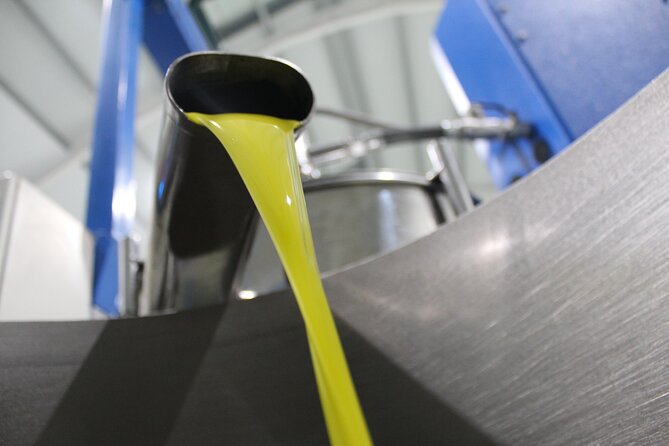
The tour starts at the Aceites Molisur site in Alhaurín el Grande, on the A-404 (Carretera Coín, Churriana), km5. Your activity ends back at the meeting point, so you’re not left to figure out your next move.
Practical note: the tour uses a mobile ticket, which is handy if you prefer not to manage paper. And water is included, which sounds small until you’re doing a museum + tasting + factory route and you realize how easily a quick outing turns into a dehydrating one.
One more practical angle: private transportation isn’t included, so plan your own way to the meeting point. If you’re already based nearby or you’ve got a rental car, this is easy. If you’re coming from farther out along the coast, you’ll want to budget time for the drive.
The Oil Museum: Seeing a Centenary Mill in Operation
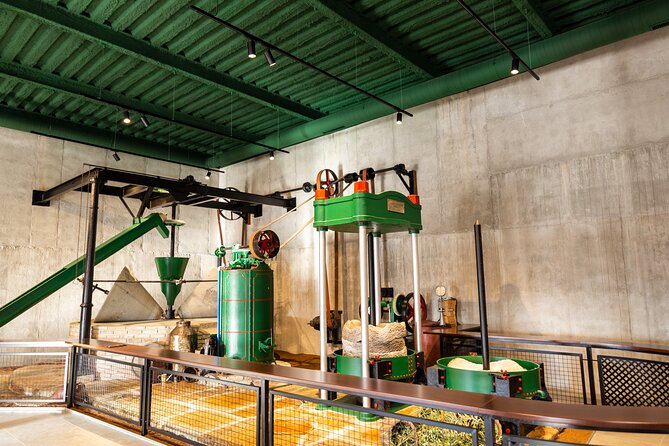
Your first big stop is the oil museum. This is where the tour earns its “worth it” badge.
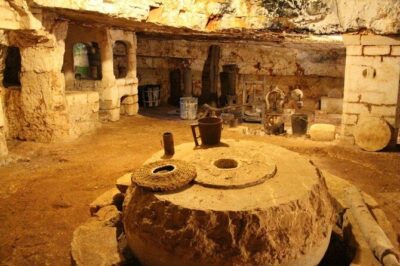
You’ll learn how they made olive oil more than 100 years ago, and the museum experience is built around seeing the machinery in operation rather than just reading labels. That matters because olive oil production is mechanical. When you watch the equipment work, you start understanding why different steps affect flavor—no magic, just process.
The museum setup is also a nice pace-change from modern industrial tours. It helps you see olive oil as an old local craft, not just a bottle on a supermarket shelf. And because the guide brings it to life with explanations, you get the story without feeling like you’re stuck in a classroom.
Three-Oil Tasting: How You Learn the Smell-and-Taste Differences
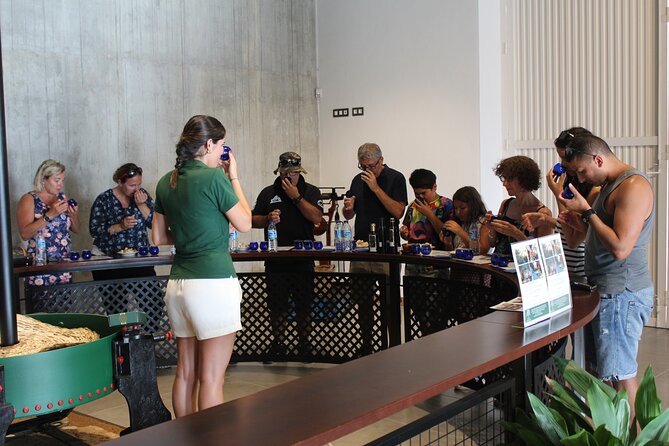
After the museum, you move into the tasting part—three olive oils. This is the moment most people come for, but here you’ll actually know what you’re tasting.
The tour focuses on differentiating extra virgin olive oils by learning nuances of aroma and flavor. Instead of treating all “good oil” as the same thing, you start picking up differences like:
- how each oil smells before you taste
- how bitterness or peppery notes can feel on your tongue
- how a milder oil can still be complex
- how you can’t judge quality by color alone
It’s also a great chance to ask questions. Small group size makes that possible. If you’ve ever wondered why one olive oil tastes like green fruit or leaves while another feels smoother, this is where you get tools to explain it.
And yes, kids do well here too. Guides have a way of making the tasting feel like a game, not a lecture. If you’re bringing a family, this is one of the easiest food tours to manage with younger guests because the focus stays on sensory fun.
The Current Production Factory: Connecting Old Machines to Today’s Flow
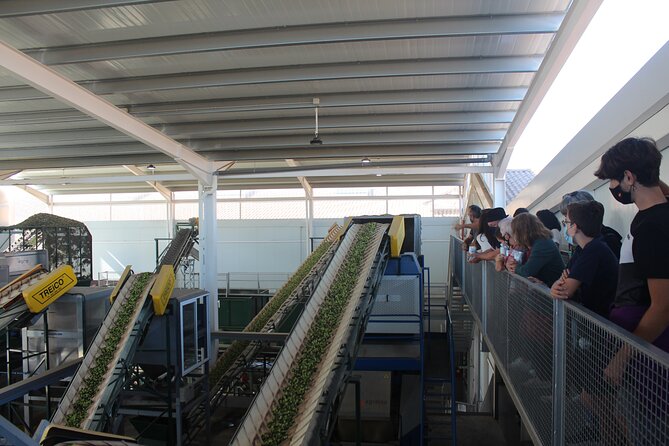
Then you move from the past to what’s running now. The tour includes a visit to the current production factory, where you discover how they make their liquid gold.
This stop is valuable because it ties the museum story to the present. You’ll see how production works with modern equipment, and you’ll likely spot how the core ideas stay the same even when the tools change.
One practical consideration: factory floors are not always designed like museums. Expect active work areas, so go at a comfortable pace. If you’re someone who likes learning by watching details, this part will feel satisfying. If you’re sensitive to smells or noise, it’s still manageable—but it’s an operational production setting, not a quiet gallery.
The Stainless-Steel Winery Stop: A Surprising Add-On
This tour doesn’t only stay in olive oil. You’ll also visit the winery, described by the site as the only stainless steel winery you can visit in Spain.
Even if you’re not a wine person, this stop breaks up the olive oil focus and gives you something visual and different—an industrial style that contrasts nicely with the older mill machinery you saw earlier.
Why I like this extra: it makes the outing feel like a small local industry tour, not just one ingredient. You leave with the sense that this region has food production culture, not only a tasting counter.
Valley Views During the Route: Don’t Miss the In-Between Moments
Between stops, you get wonderful views of the valley. This matters because it prevents the tour from feeling like one long interior block. You’ll get a quick visual reminder that olive trees need space, sun, and time—and the scenery gives context to what you’re tasting.
It’s also a nice moment for photos, but I’d treat it as more than a postcard pit stop. Use the view as a reset: take a breath, then go back inside ready to focus on what the guide is explaining.
Guides Like Ana, Lucia, or Jerrard: The Human Part That Makes It Click
The quality here isn’t just in the machines or the tasting menu. It’s in how the guide runs the flow.
I saw a pattern in the guides named for this experience—people like Ana, Lucia, and Jerrard are all mentioned as leading tours. That tells you the staff aren’t just reciting facts. They explain in a way that’s easy to follow and fun enough to keep attention during the museum-to-tasting transition.
If you want to get the most out of the tasting, listen closely to what your guide points out about aroma and how to differentiate oils. That’s where the experience turns from pleasant to useful—you leave with an ability you can use later when you shop in Málaga.
Who This Tour Is Best For (And Who Might Skip It)
This tour is a strong match for:
- Foodies who want an educational tasting, not just a sip-and-go
- Families looking for something that works for both adults and kids
- People who want a half-day activity without committing to a long drive or a full meal setup
- Anyone interested in Spanish production culture in a compact format
It may be less ideal if you want:
- a long sit-down meal or a big lunch experience
- a tour that feels purely outdoors
- a deep, hours-long technical class
Price and Value: Is $35.09 a Good Deal?
At $35.09 per person, this isn’t a freebie, but it also doesn’t pretend to be a half-day cooking class you need to book weeks ahead.
Here’s why the value makes sense based on what’s included:
- You get a guided tour of the olive oil museum with the centenary mill experience
- You get a tasting of three extra virgin olive oils
- You visit the current production factory
- You include a winery visit
- Water is included
Add in the small group format (max 25) and the fact it’s English-friendly, and the price starts looking fair for a structured, multi-stop food production outing. If you’ve ever paid for a tasting that felt like it barely scratched the surface, this one tends to feel more complete.
Also, the tour’s duration—about 1 hour 30 minutes—helps. You’re buying focused time, not a vague “we’ll see” itinerary.
Tips to Get the Most Out of Your Tasting
You can do better than sipping. Here’s how I’d approach it so you come away with real takeaways.
- Start with aroma. Smell each oil before tasting and notice what changes from bottle to bottle.
- Taste slowly. You’re not trying to finish a shot; you’re training your palate to detect differences.
- Ask your guide one question. Any question about what you notice—peppery notes, bitterness, fruitiness—will make the tasting stick.
- If you’re shopping afterward, compare what you learned to what you see on shelves. It’s the fastest way to turn a tour into a lasting skill.
One more practical note: the site says pets aren’t permitted, so plan accordingly if you’re traveling with animals.
Should You Book This Olive Oil Tour in Málaga?
If you want a short, high-impact experience in the Málaga region, I’d book it—especially if you like food that comes with context. The combination of museum + tasting + active production + winery is exactly the kind of local industry experience that makes you feel like you understood something, not just ate something.
I’d say skip it only if you’re specifically looking for a long meal experience, or if you prefer tours that are purely outdoors. Otherwise, this is one of the cleanest ways to spend 90 minutes learning how olive oil is made and tasting the differences in a guided, guided-by-experts way.
Go in hungry for curiosity, not just snacks—and you’ll leave seeing olive oil production everywhere you look.
FAQ
How long is the guided tour and olive oil tasting?
The tour lasts about 1 hour 30 minutes.
Where does the tour start?
You meet at the Aceites Molisur location on Carretera Coín, Churriana, A-404, km5 in Alhaurín el Grande, Málaga, Spain.
What language is the tour offered in?
The tour is offered in English.
What does the price include?
The tour includes bottled water and the guided experience, including the olive oil tasting.
Does the tour include tasting of olive oil?
Yes. You’ll taste three olive oils and learn to differentiate their nuances and aromas.
Is transportation included?
No. Private transportation is not included.
How big is the group?
The experience has a maximum of 25 travelers.
Can I cancel for a full refund?
You can cancel up to 24 hours in advance for a full refund. If you cancel less than 24 hours before the start time, the amount paid is not refunded.