REVIEW · PULA
Olive Oil Guided Tasting and History in Pula
Book on Viator →Operated by Museum Olei Histriae · Bookable on Viator
If you buy olive oil by instinct, you’ll change your habit here. This small-group experience at Museum Olei Histriae pairs a quick museum stop with a guided olive oil tasting that teaches you what to look for and why. You’ll start with how oil was made and exported in Istria, then shift into a sensory session designed for real-world shopping.
My favorite part is the tasting room approach: you test high-quality Istrian olive oils and also compare them with one you’d typically see in a supermarket. I also like the way the guide breaks down attributes you can actually sense, then ends with a dessert pairing that surprises your palate.
One thing to consider: the museum portion is short and the setup can feel compact, so if you want a long, hands-on-style exhibit, plan to focus on the tasting side.
In This Review
- Key things to know before you go
- Stepping into the House of Istrian Olive Oil
- The Roman-to-today exhibit: why Pula’s oil story starts early
- Sensory tasting in the room: learning to spot quality fast
- What polyphenols mean for real health talk
- Dessert meets olive oil: a surprisingly smart palate test
- Snacks and included tasting value
- English-friendly and small-group: a practical foodie tour
- Who this olive oil tasting is best for
- Should you book the Olive Oil Guided Tasting and History in Pula?
- FAQ
- How long is the olive oil tasting tour in Pula?
- What’s included in the experience?
- Is the tour offered in English?
- How big is the group?
- Where does the tour start?
- Is cancellation free?
Key things to know before you go
- Roman-era olive oil context: learn how oil production and export worked in Istria
- Two short films: one on traditional processing and one on today’s methods
- Sensory tasting with comparison: high-quality oils plus a typical supermarket oil
- Good vs. bad extra virgin, explained: recognize positive and negative attributes
- Health talk without hype: why polyphenols matter
- Max 20 people: small enough to ask questions in English
Stepping into the House of Istrian Olive Oil
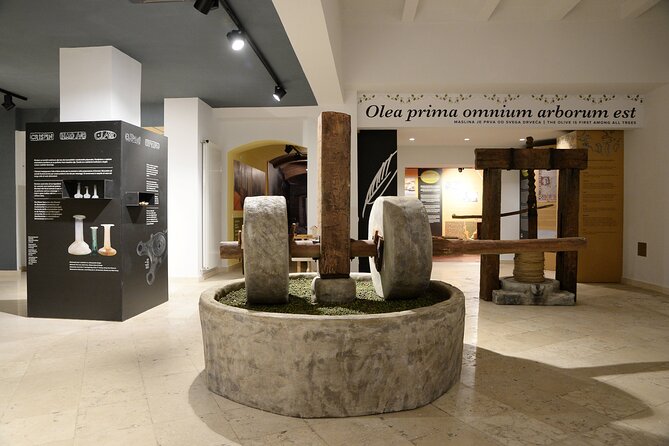
The tour starts at the Museum Olei Histriae site, often described as the House of Istrian Olive Oil. You’re not just sampling drinks and snacks—you’re getting a guided framework for how olive oil quality shows up in aroma, flavor, and that lingering finish.
Because it’s capped at 20 participants, the session stays focused. That matters with something as sensory as olive oil, where small differences are easy to miss if the group is too large.
You can expect this to run about 90 minutes (give or take depending on your curiosity). The format is a nice rhythm: museum context first, tasting second, and dessert at the end.
You can also read our reviews of more tours and experiences in Pula.

The Roman-to-today exhibit: why Pula’s oil story starts early
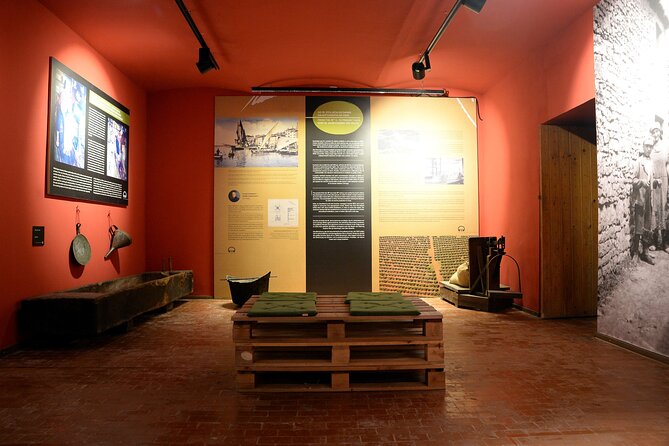
Before you get to the tasting room, you’ll go through an exhibition that sets the scene. You’ll see how Romans in Istria made olive oil, where it was produced, and how it was exported.
For me, this is a smart warm-up. It gives you cultural context fast, without turning the experience into a long lecture. Even if you know olive oil is important in Mediterranean life, the Roman angle helps you see it as a long-running regional craft.
You’ll also watch two short films. One focuses on traditional processing, and the other shows how olive oil is made today. This pairing does two useful things: it connects the past to present technique, and it helps you understand why certain flavors and characteristics are still prized.
Sensory tasting in the room: learning to spot quality fast
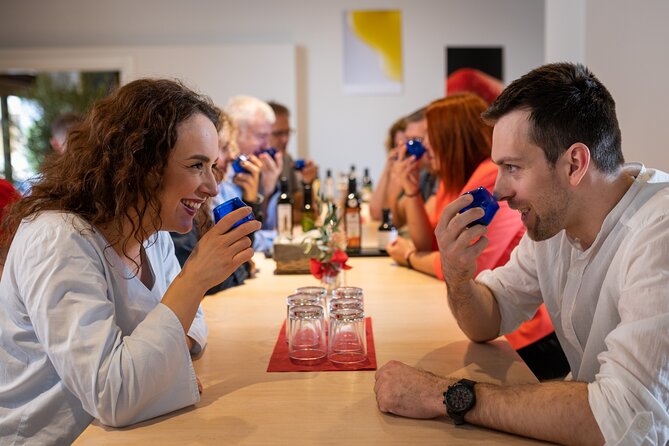
Then you shift into the tasting room, where the real learning happens. You’ll walk through a sensory analysis of high-quality Istrian olive oils. The tasting isn’t one-and-done; you’re guided through what to pay attention to as you taste.
Here’s the part I think you’ll appreciate most: you’ll also sample an oil that people often buy in supermarkets. That comparison is practical. It helps you feel the difference between what’s labeled as extra virgin and what actually performs better in the cup and on the palate.
The guide teaches you how to recognize good from bad olive oils. You’ll practice identifying positive and negative attributes, and you’ll get prompted to connect what you notice (smell and taste) with what the oil likely represents in terms of quality.
This is where the tour becomes more than a snack stop. It gives you a set of sensory cues you can carry home, so you don’t rely only on marketing words.
What polyphenols mean for real health talk
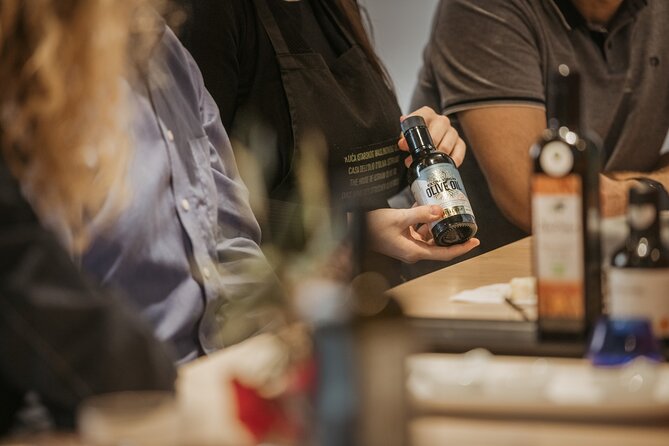
At some point during the tasting, the guide explains why polyphenols are important for our health. The useful part isn’t the science heavy-lifting—it’s the translation into food sense.
You’ll see polyphenols positioned as a key reason why certain extra virgin oils are valued beyond taste. For you, the takeaway is that health-focused claims are not just vague slogans. They connect back to what quality means in an olive oil you can actually taste.
If you tend to ignore the label and just pour oil on things, this section may be the one that reconnects you to the reading side of shopping. It also helps you understand why some people care so much about variety, processing, and freshness.
Dessert meets olive oil: a surprisingly smart palate test

At the end, you get a dessert pairing. The museum calls it a surprise dessert, and it includes a sweet component paired with high-quality extra virgin olive oil.
This sounds odd at first. But that’s the point. Pairing sweet with olive oil helps you notice balance: how bitterness or pungency can work with sweetness, and how aroma changes when the oil sits alongside sugar.
It’s also a good way to make the experience feel complete. After tasting multiple oils, your palate can get fatigued, and dessert resets things while still reinforcing what you learned.
Snacks and included tasting value
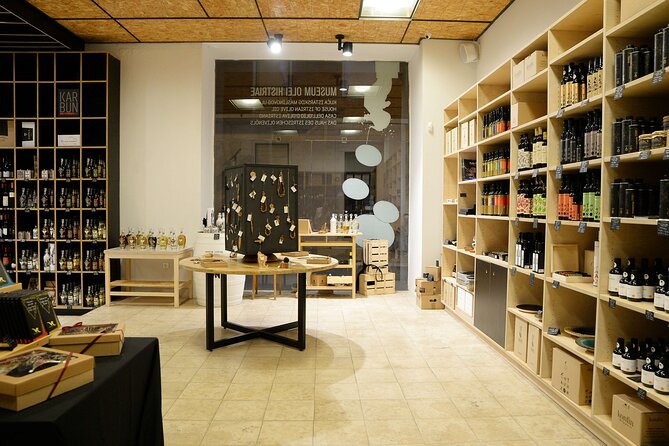
The experience includes olive oil tasting and snacks, plus the dessert. When you break down the price, that inclusion matters because you’re paying for guided instruction, not just free samples.
At $36.04 per person for about 90 minutes, the value is strongest if you want to learn. You’re paying for the chance to compare oils side-by-side and to get explanations tailored to what you’re tasting right now.
If you’re the type who already buys and cooks with high-quality olive oil every day, you might still enjoy the comparison and sensory practice. But the biggest payoff is for people who want a better way to choose—someone who has felt frustrated by confusing labels or inconsistent flavor.
English-friendly and small-group: a practical foodie tour
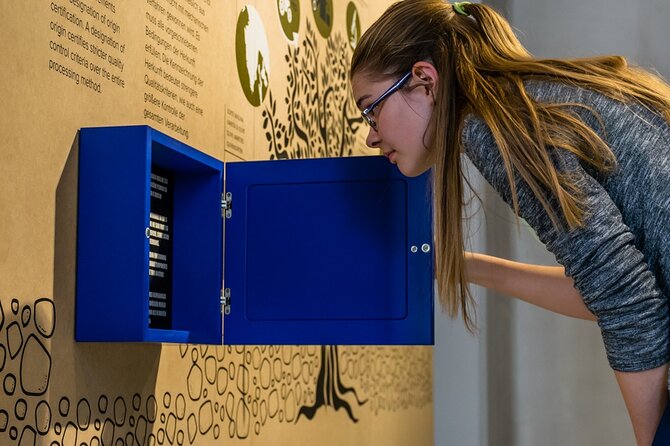
The tour is offered in English, which makes it easy to get the most out of the tasting language. Olive oil has vocabulary that doesn’t always transfer well—bitterness, fruitiness, intensity, and other sensory notes. Having an explanation while you taste helps you build that mental map.
The group size is small, and that’s not just a comfort perk. It makes questions easier, and the guide can respond to what people are noticing.
Also, it uses a mobile ticket, which is handy if you’re hopping between Pula sights. The tour starts at Istarska ul. 30, 52100, Pula, and it ends back at the meeting point, so you’re not scrambling across town at the end.
Who this olive oil tasting is best for
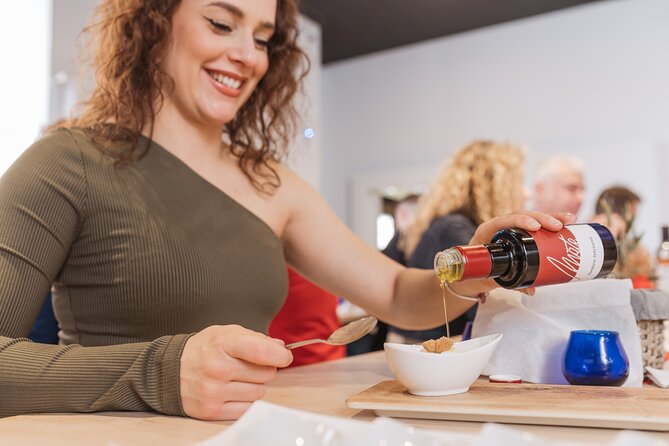
This tour is a great match if you’re a foodie who likes learning how local ingredients work. It’s also a smart choice if you’re curious about Croatian food culture and want something more specific than a general food tour.
If you’re traveling with a group of friends and want a shared activity that won’t drag, this fits well. The pace is quick, and you’ll leave with a clearer idea of what quality tastes like.
It’s also ideal if you’ve got a practical goal: buying better olive oil, cooking with it more confidently, or impressing someone who claims all olive oil tastes the same.
Should you book the Olive Oil Guided Tasting and History in Pula?
Book it if you want a hands-on guided lesson about how extra virgin quality shows up in real sensory terms. The Roman-era context is a nice start, but the main value is in comparing oils and learning how to recognize good vs. bad attributes.
Consider skipping if you’re expecting a long museum experience or lots of interactive exhibition time. The museum part is compact, and the tasting portion is where your hour-and-a-half really turns useful.
If you’re in Pula during the main sightseeing season, it’s worth booking ahead since the average booking lead time is about 23 days.
FAQ
How long is the olive oil tasting tour in Pula?
It lasts about 1 hour 30 minutes, roughly 1 to 1.5 hours depending on interest and pace.
What’s included in the experience?
You’ll get an olive oil tasting with sensory analysis, included snacks, and a sweet surprise dessert paired with olive oil.
Is the tour offered in English?
Yes, the experience is offered in English.
How big is the group?
The tour has a maximum of 20 participants.
Where does the tour start?
The meeting point is Istarska ul. 30, 52100, Pula, Croatia, and the activity ends back at the same location.
Is cancellation free?
Yes, free cancellation is available up to 24 hours in advance for a full refund.