REVIEW · PERUGIA
Olive Oil Tasting & Mill Guided Visit in Perugia
Book on GetYourGuide →Operated by Slow Travel · Bookable on GetYourGuide
You can taste Umbria’s olive culture in one hour. Inside Antico Frantoio Trampolini, you get 5+ olive oils paired with crostini and a guided walk through a working-style museum of pressing history. I especially liked how the tasting moves beyond plain olive oil flavor—single cultivars, careful blends, and even spiced oils show you what changes from farm to bottle. The main consideration: the visit is short, so you won’t leave with deep technical details unless you ask questions during the tour.
What makes this place feel different is that you’re not just sampling products. You’re walking through a mill that has been producing olive oil since the 1300s, with the Trampolini family running the site since 1785. It’s also near the historic Templar Abbey of San Bevignate, so you can turn this into a satisfying food-and-history stop without adding much travel.
Timing also matters in Perugia. The mill is a quick drive from the center, and it’s walkable, but the area is on a hill—one reviewer noted campervan parking can feel tight during harvest prep. If you’re bringing a big vehicle, plan to park farther down and walk.
In This Review
- Quick Key Points to Know Before You Go
- Walking Into a Mill That’s Been Producing Oil Since the 1300s
- The Tasting Game Plan: 5+ Oils, Bruschetta, Truffle, and Charcuterie
- 45 Minutes of Food That Teaches You How to Taste
- The Mill Tour: Artifacts, Presses, Separators, and Jars
- Alessandro’s Explanations: Clear, Energetic, and Easy to Follow
- $53 for 1.5 Hours: Does It Feel Like Value?
- Logistics in Perugia: Walking Up, Entering Through the Arch, and Parking Reality
- Who This Olive Oil Mill Visit Is Best For
- Should You Book Antico Frantoio Trampolini?
- FAQ
- How long is the olive oil tasting and mill visit?
- What is included in the tasting?
- Which olive oils will I sample?
- Do I get food besides olive oil?
- What languages are the tours in?
- How big is the group?
- Is the experience wheelchair accessible?
- Is transportation included from Perugia city center?
- Can I cancel for a refund?
- Can I reserve now and pay later?
Quick Key Points to Know Before You Go
- 5+ olive oils including single-origin cultivars (like Leccino, Frantoio, and Peranzana) plus blends
- 10 spiced and flavored olive oils for a creative tasting you can actually compare
- Crostini with spreads such as black/green olive pâtés, olive preserves, and truffle sauces
- A guided tour of a mill and olive oil museum, with artifacts like old presses and terracotta jars
- Small group size (max 10) and a live guide who speaks English and Italian
Walking Into a Mill That’s Been Producing Oil Since the 1300s
This is one of those Perugia experiences where the setting supports the food. You start at Antico Frantoio Trampolini, and you enter through an arch to reach the shop and the guided visit—so it helps to arrive a few minutes early with your ticket ready.
The site is tied to Umbria’s olive culture in a very direct way. The mill has been producing olive oil since the 1300s, and the Trampolini family has kept it going since 1785. That matters because you’re tasting with context: the guide can connect what’s in your glass to the tools and storage used over generations.
You’ll also get a sense of location. The mill sits near the historic Templar Abbey of San Bevignate, so this works well if you’re already doing a daytime route around Perugia’s historic core. You can keep the rest of your day easy—no long detours needed—because the mill is close to the city center.
You can also read our reviews of more tours and experiences in Perugia.
The Tasting Game Plan: 5+ Oils, Bruschetta, Truffle, and Charcuterie
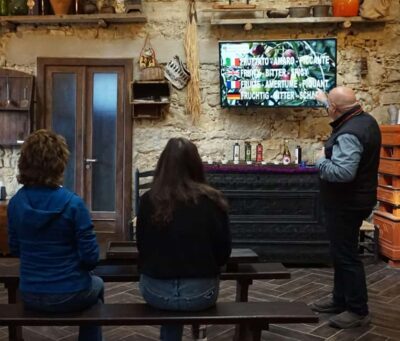
The tasting portion is where this experience earns its money. You’ll sample 5+ premium olive oils, and the session is structured so you can notice differences rather than just sipping.
Here’s what you should expect to taste:
- Single-origin cultivars, including Leccino, Frantoio, Dolce Agogia, Moraiolo, Peranzana, and Nocellara
- Blends, including Generoso, Armonioso, the Family Reserve, and organic selections
- A creative section featuring 10 spiced and flavored olive oils (these are made to highlight specific flavor directions, not just novelty)
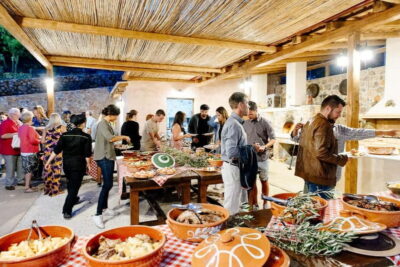
You won’t just drink oil by itself. The food is built for pairing:
- Crostini/bruschetta with olive spreads, including black and green olive pâtés and olive preserves
- Sauces such as truffle-infused options
- A board of cheeses and locally sourced cured meats to give the oils real contrast—salt, fat, and texture help you understand why an oil tastes one way with bread versus another way with charcuterie
What I like about the way this is handled: it’s not just sampling “good stuff.” You taste oils that likely differ in bitterness, aroma, and intensity, then you eat something alongside them so the flavor makes sense fast. If you care about what to buy back home, that pairing logic is exactly what you’ll want later when you’re cooking.
45 Minutes of Food That Teaches You How to Taste
The tasting isn’t rushed, but it also isn’t slow enough to get boring. Plan on about 45 minutes for this part, and watch for the guide to explain why each oil gets matched to specific bites.
A helpful thing: the guide’s explanations are practical. One visitor described how they learned why each oil matched the dishes and how the oils were produced. Another said they appreciated how accommodating the hosts were when they mentioned being vegetarian ahead of time. So if you have food preferences, it’s worth letting the team know when you book.
Also, if you’re the type who thinks you don’t have a trained palate: good news. You don’t need wine-judge skills here. The tasting is set up so comparison is built in. You’ll be able to tell which oils feel peppery or smoother, which flavors work with truffle, and which ones shine with olive spreads.
The Mill Tour: Artifacts, Presses, Separators, and Jars
After the tasting, the tour shifts from flavor to machinery and storage—the “how it’s made” story. Your guide walks you through the historic olive mill and the olive oil museum, with stops for artifacts that trace the production evolution over centuries.
The details you’ll likely see include:
- An Assisi stone mill dating to the 13th century
- Early 20th-century centrifugal separators (a step in mechanization)
- Terracotta jars preserved from the 17th and 19th centuries
- Other olive oil-related items like ancient olive presses and additional preserved exhibits
Why this matters: olive oil production isn’t just taste—it’s time, storage, and process control. Seeing older pressing tools makes modern extraction feel less abstract. Even if you don’t memorize dates, you’ll understand the basic arc: old-school pressing methods, then newer approaches that changed how efficiently olives could be processed and how products could be handled afterward.
If you like food history, the museum part is often the difference between a casual tasting and a “you’ll remember this” experience. Here, the room itself becomes the teacher.
Alessandro’s Explanations: Clear, Energetic, and Easy to Follow
Most of the reviews point to one thing: the guides don’t sound like they’re reading a script. Alessandro is mentioned repeatedly for passion and for explaining the olive oil-making process in a way that clicks.
You’ll hear a mix of:
- The production process (how olive oil goes from fruit to oil)
- The meaning behind cultivar differences
- How blends and flavored/spiced oils are built for specific profiles
- How the match between oil and food helps you understand the oil’s character
This matters because olive oil is one of those products people either overthink or ignore. A strong guide helps you find the middle ground: enough knowledge to taste with purpose, not so much detail that you feel lost.
Also, this tour runs with English and Italian, and you’ll be with a small group (max 10). That group size helps you ask questions without feeling like you’re waiting your turn for ages.
$53 for 1.5 Hours: Does It Feel Like Value?
At $53 per person for about 1.5 hours, you’re paying for two things at once: a guided mill/museum visit and a fairly structured tasting with multiple oils and food.
Is it “cheap”? Not really. But it’s not just buying a bottle of olive oil in a shop. You’re getting:
- Multiple single-origin oils and blends (not a token sample)
- An additional tasting component featuring spiced/flavored oils
- Crostini with spreads plus cheese and cured meats
- A guided tour inside the mill site with visible, preserved artifacts
If you like buying food souvenirs, this format is also a practical advantage. By the time you reach the end, you’re tasting enough varieties to know what fits your taste. Even if you don’t buy anything, you’ll walk away with a clearer sense of what kind of olive oil you actually want in your kitchen.
Logistics in Perugia: Walking Up, Entering Through the Arch, and Parking Reality
The location is close to the center—about 4 minutes by car from Perugia city center—and the activity notes it’s walking distance. That’s good because you can plan around the hills without needing taxis for every step.
Where you should be ready for friction: parking. One review mentioned that the yard looked crowded when harvest prep was starting, especially for a campervan. The practical fix was to park in a larger area farther down the hill and walk back up.
If you drive, keep this in mind:
- Go early if possible.
- Treat parking as “may take a bit,” not “easy and guaranteed.”
Once you arrive, entry is straightforward: you go through the arch, and you show your ticket for the guided visit and tasting.
Who This Olive Oil Mill Visit Is Best For
I think this works best if you’re at least one of these:
- A foodie who wants more than a generic tasting
- Someone curious about how olive oil production changed over time
- A practical shopper who wants to compare oils and flavors quickly
- A history-minded traveler who likes artifacts you can see and touch with your eyes
It’s also a good choice if your schedule is tight. The full experience is about 1.5 hours, so you don’t have to reorganize your whole day to fit it.
Should You Book Antico Frantoio Trampolini?
I’d book this if you want an olive oil experience with real context. The combination of structured tastings, food pairings, and a guided walk through a mill museum with preserved equipment makes it feel like a complete package, not just a quick stop.
Skip it only if you’re looking for a long, in-depth class that lasts half a day. This is timed well, but it’s not a multi-hour technical workshop. If you want to go deeper, come hungry for questions—and don’t be shy about asking Alessandro to explain what you’re tasting as you go.
FAQ
How long is the olive oil tasting and mill visit?
It lasts about 1.5 hours, with a guided tour (around 30 minutes) and a food tasting period (around 45 minutes), plus time to walk to and from the different parts of the experience.
What is included in the tasting?
You’ll taste 5+ olive oils, including single-origin cultivars, blends, and spiced/flavored olive oils, plus bruschetta/crostini with olive spreads and truffle sauces, along with cheese and cured meats.
Which olive oils will I sample?
The tasting includes single-origin cultivars such as Leccino, Frantoio, Dolce Agogia, Moraiolo, Peranzana, and Nocellara, plus blends like Generoso and Armonioso, the Family Reserve, organic selections, and 10 spiced/flavored olive oils.
Do I get food besides olive oil?
Yes. The experience includes crostini/bruschetta with olive spreads and truffle sauces, plus a charcuterie board with cured meats and cheese.
What languages are the tours in?
The live guide speaks English and Italian.
How big is the group?
It’s a small group limited to 10 participants.
Is the experience wheelchair accessible?
Yes, it’s listed as wheelchair accessible.
Is transportation included from Perugia city center?
No. Transportation to and from the location is not included.
Can I cancel for a refund?
Yes. Free cancellation is available up to 24 hours in advance for a full refund.
Can I reserve now and pay later?
Yes. The activity offers a reserve now & pay later option.