REVIEW · BAEZA
Baeza: Olive Oil Tasting Experience
Book on GetYourGuide →Operated by La Casa del Aceite · Bookable on GetYourGuide
Olive oil tastings can feel fancy, but this one is practical. In about 1.5 hours, you walk through the olive-oil story of Jaén and Baeza, then taste three different varieties with a proper tasting glass and a note card. I love that the tasting is guided step-by-step, and I also like the palate-reset setup with apples and bread between samples. One possible drawback: it’s a short visit, so if you’re hoping for a longer, more visual production walk-through, you might want extra time on your own afterward.
What makes this stop worth planning is the mix of culture and senses. You get images showing how olives are picked and oil is produced, then you sit down and actually learn how different oils smell and taste. And if your guide is Maria or Anna, expect clear explanations in English or Spanish and plenty of Q&A time.
In This Review
- Key Points Worth Your Time
- Where to Start: La Casa del Aceite on Plaza de la Constitución
- From Jaén to Baeza: What the Olive Oil Story Teaches You
- The Tasting Setup: Blue or Red Glasses and a Notes Card
- How to Compare Three Varieties Without Guessing
- Apples, Bread, and EVOO Snacks: Turning Tasting Into a Meal
- Price and Value: Is $17 Worth 1.5 Hours?
- Best For: Who Will Enjoy This Most
- A Few Practical Notes to Make Your Tasting Better
- Should You Book This Olive Oil Tasting in Baeza?
- FAQ
- Where is the meeting point?
- How long does the olive oil tasting last?
- How much does it cost?
- What will I taste during the experience?
- What languages are available for the guide?
- Do I need to buy tickets in advance?
- Is the tour wheelchair accessible?
- What should I wear?
Key Points Worth Your Time
- La Casa del Aceite location: Meet at the entrance on Plaza de la Constitución in Baeza, then get straight into the tasting experience.
- 3 varieties, not just samples: You taste three olive oils and learn how to distinguish them.
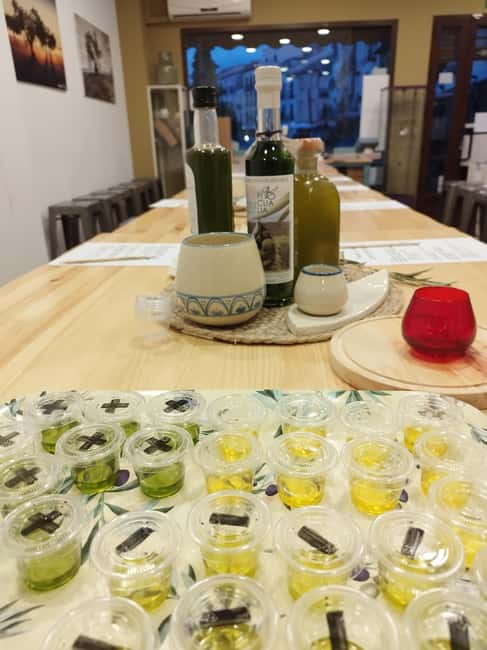
- A real tasting routine: Use an official blue or red tasting glass and a card for your notes.
- Palate resets included: Apples and bread are served between tastings so you can compare more accurately.
- EVOO products on the table: You also try a small selection of foods made with extra-virgin olive oil, such as specialty chocolate.
Where to Start: La Casa del Aceite on Plaza de la Constitución
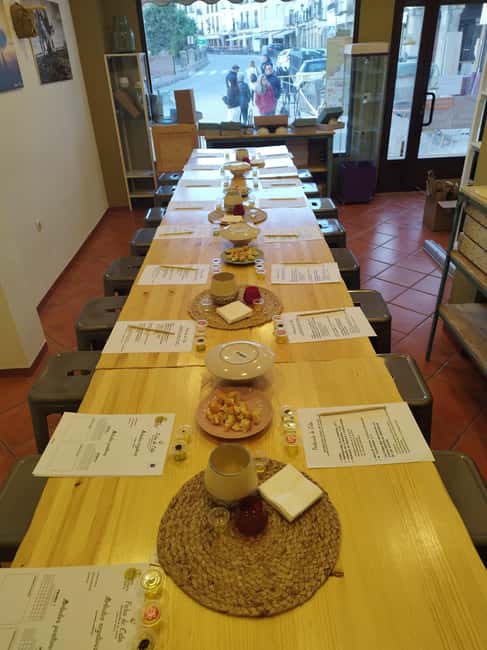
Your experience begins at La Casa del Aceite, right at the entrance on Plaza de la Constitución in Baeza. I like that the meeting point is simple: you’re not hunting for a back room or a hidden door. Once you’re inside, the staff and guide lead you right into the olive oil focus, which helps if your day in town is busy.
This is the kind of activity that works well when you want something local and hands-on, but you don’t have hours to wander. Because the total duration is 1.5 hours, it fits neatly before or after lunch, or as a calm indoor break if the afternoon heat hits.
You can also read our reviews of more tours and experiences in Baeza.

From Jaén to Baeza: What the Olive Oil Story Teaches You
Before you taste anything, you get the context that makes the tasting click. You start learning about the culture of olive oil in Jaén, including the journey from early crops through the olive trees and plantations in Baeza. It’s not just “olive oil is good for you” talk. The guide frames it as a regional craft and a local economy thing, so you understand why people care about quality.
One practical plus: you’re shown images of how olives are picked and how the oil is produced. Even if you know nothing about the process, those visuals help you connect what you’re seeing in the region with what ends up in the glass. And for me, that’s the difference between a tasting that’s entertaining versus one that teaches you how to notice.
If you’re the type who likes to get oriented fast, this section helps you do that. You leave with a mental map: how the olives become oil, and how varieties and quality are discussed locally.
The Tasting Setup: Blue or Red Glasses and a Notes Card
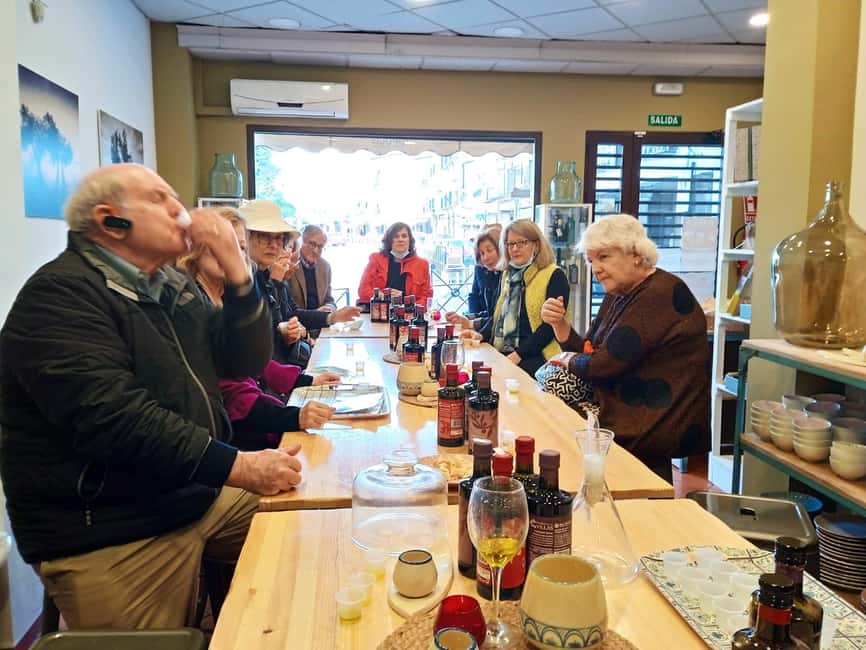
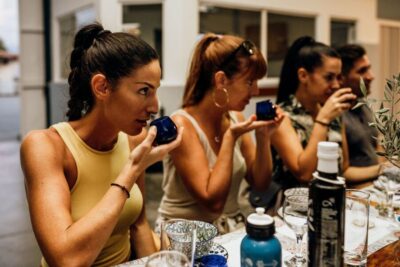
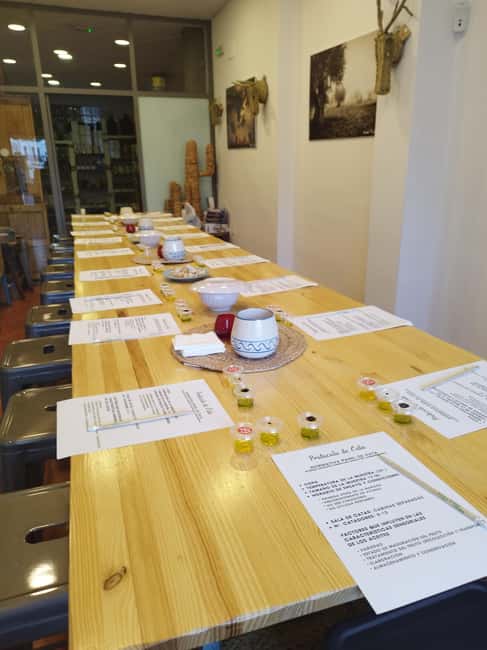
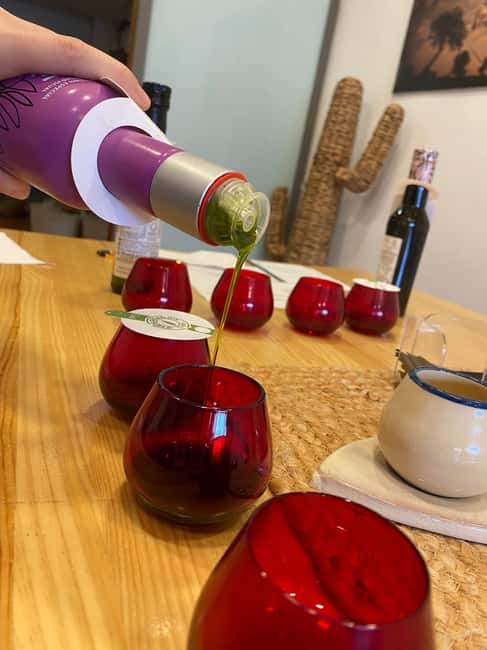
Then you sit at the table for the tasting itself. You’ll taste three olive oils, and you do it using an official tasting glass—either blue or red—plus a card where you can write down what you notice.
That detail matters more than it sounds. A proper tasting glass helps you experience aromas better, and a notes card keeps you from relying on memory. I’ve found that if you try to remember three different oils without writing anything down, you end up comparing by vague impressions instead of real differences.
Also, you’re not tasting in a vacuum. Apples and bread are served to cleanse your palate between samples. That’s a smart move: it keeps the flavors from blending together in your mouth, so you can judge each oil more fairly.
How to Compare Three Varieties Without Guessing
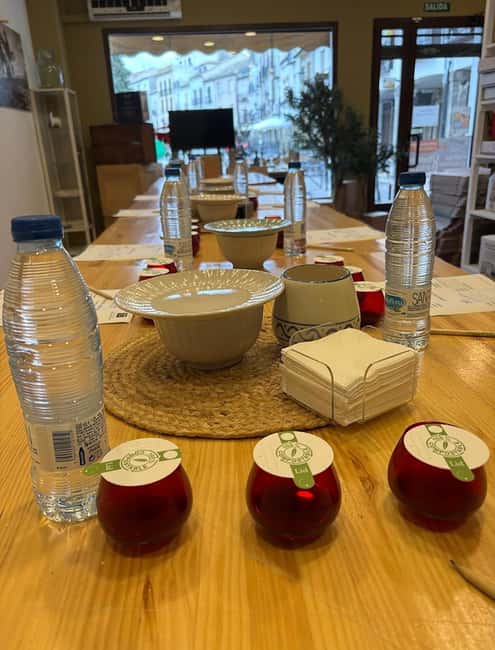
The best olive oil moments are the ones where you stop thinking “tasty” and start thinking “why.” In this tasting, the guide helps you learn how to distinguish the different varieties, and what to pay attention to while you taste.
Here’s a simple way to use the experience to get real value from your time:
- Smell first, quickly. Note the first impression before you overthink it.
- Take a small sip, let it coat your mouth, then breathe out gently.
- Watch for contrast between the oils. You’re not searching for a single perfect flavor; you’re learning the range.
- Write one or two keywords per oil. Even simple notes like fruity, grassy, peppery, or bitter help you compare later.
Even if you’ve never done an oil tasting before, the guide’s job is to help you develop that vocabulary and confidence. If your guide is Maria, you may get especially strong English explanations and a strong Q&A style. If it’s Anna, the presentation can also be taught in a clearly enthusiastic way.
One thing to keep in mind: if you’re the type who hates instructions, this may feel a bit structured. But that structure is what makes it more than just “try three little pours.”
Apples, Bread, and EVOO Snacks: Turning Tasting Into a Meal
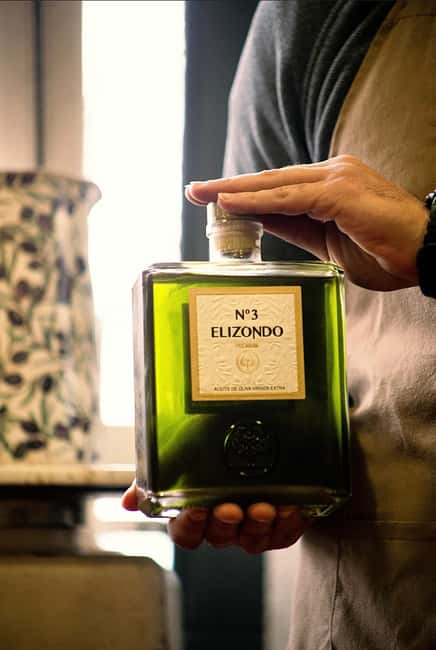
Between oil tastings, you get apples and bread as palate cleansers. This is one of those small inclusions that upgrades the whole experience. Bread and apple flavors reset your mouth, so the next oil can show up with its own character instead of being dulled by what came before.
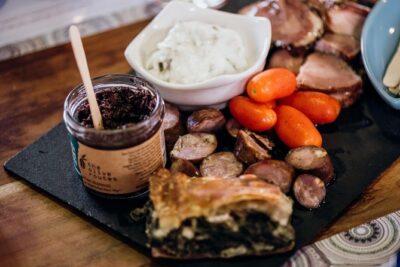
After the main tasting, there’s also a small selection of gastronomic products made with EVOO. The experience includes examples like specialty chocolate. I love this part because it shows how olive oil moves beyond the glass. You start thinking about pairing ideas and how EVOO flavors can show up in everyday treats, not only savory dishes.
Practical tip: take your time with the snacks. Don’t rush through them just to finish. The point is to connect what you tasted in the oils with what you’re enjoying on the table.
Price and Value: Is $17 Worth 1.5 Hours?
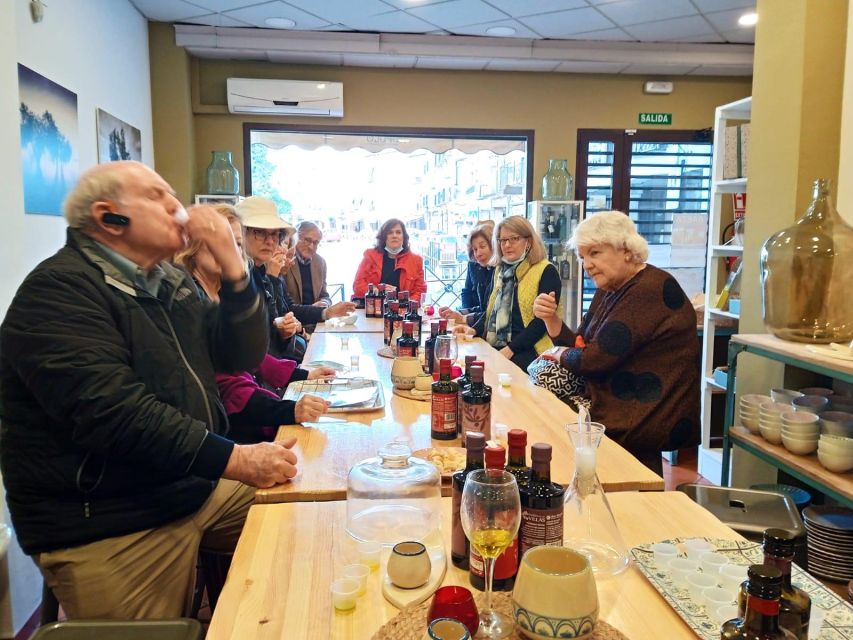
For $17 per person, you’re paying for three things that are hard to recreate on your own:
- Guided learning about the olive oil culture of Jaén and Baeza
- A structured tasting of three varieties using an official tasting glass and note card
- Food pairings, including apples and bread, plus additional EVOO-based products (like specialty chocolate)
If you were to buy olive oil bottles and try them at home, you could spend more than this quickly—especially if you’re buying quality oils you can compare reliably. Here, you’re paying for tasting education plus the convenience of everything arranged for you.
So for me, the value math works best if you want to come away with skills, not just a pleasant hour. You get to learn what to notice in oils and how to separate one variety from another. That turns the tasting into a mini workshop you can actually use later when you shop or eat in Andalusia.
Best For: Who Will Enjoy This Most
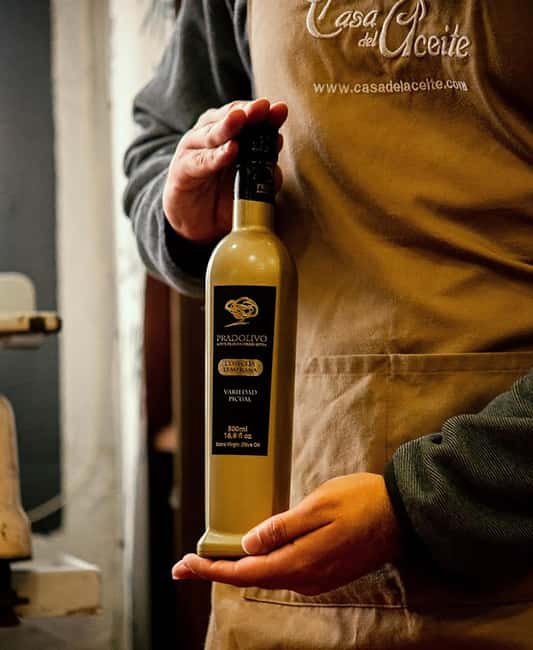
This is a strong choice if you’re the kind of traveler who likes food culture with a method. You’ll enjoy it if you want hands-on learning, short and focused time, and a guided experience that stays rooted in local production.
It’s also a good fit if you’re visiting Baeza on a day when you want something indoors that still feels authentic. The experience is wheelchair accessible, and the session is guided in Spanish and English, which makes it easy to follow.
If you’re going with someone who thinks olive oil is just olive oil, this tasting is a fair bet. The guide helps you understand differences, so it doesn’t stay a one-note experience.
A Few Practical Notes to Make Your Tasting Better
Wear comfortable clothes. This is a sit-down experience at a table, and you’ll likely be listening and tasting in one place for most of the 1.5 hours.
Bring your curiosity. You don’t need to be an olive oil expert. The guide gives you what you need to notice differences between varieties and to write down sensory impressions.
And if you’re the note-taking type, use the card right away. Jot down a couple keywords during each oil, then you’ll be able to remember what you liked and why after you leave.
Should You Book This Olive Oil Tasting in Baeza?
I’d book it if you want a short, high-value food experience that teaches you how to taste, not just what tastes good. The combination of Jaén-and-Baeza context, three guided varieties, and palate-cleansing pairings makes it feel like real instruction in a relaxed setting.
I’d skip it only if you’re looking for a long, cinematic walk-through of the full production process or a more extended tasting flight beyond three oils. This one is focused and timed. In return, it stays easy to fit into a travel day.
If you’re even a little interested in food culture, this is one of those activities that pays you back the next time you see bottles on a market shelf or EVOO used in local cooking.
FAQ
Where is the meeting point?
You meet at the entrance of La Casa del Aceite in Plaza de la Constitución in Baeza.
How long does the olive oil tasting last?
The experience lasts 1.5 hours.
How much does it cost?
The price is listed as $17 per person.
What will I taste during the experience?
You taste three different olive oils and you also enjoy a small tasting of EVOO-based gastronomic products, such as specialty chocolate, plus apples and bread.
What languages are available for the guide?
The guide offers English and Spanish.
Do I need to buy tickets in advance?
The experience includes skip-the-ticket-line, and you can reserve now and pay later.
Is the tour wheelchair accessible?
Yes, it is wheelchair accessible.
What should I wear?
You should wear comfortable clothes.