REVIEW · THESSALONIKI
Olicatessen Olive Oil Tasting in Thessaloniki
Book on Viator →Operated by Olicatessen · Bookable on Viator
Olive oil tastes better when you learn why. This Olicatessen tasting in Thessaloniki is built around a six-olive-oil flight in the Modiano Market area, with a guide talking you through what makes each bottle different by region and variety. I especially like the hands-on focus on organoleptic qualities, since you’re tasting for aroma, texture, and flavor, not just hearing facts.
One thing to consider: it’s about 1 hour, so it moves at a lively pace. If you’re very hungry, plan a proper meal after, because the session ends with an additional Greek gastronomy bite rather than a full food stop.
In This Review
- Key Highlights You’ll Actually Care About
- First Stop in Modiano Market: Finding Olicatessen at Ermou 24
- How the Tasting Works: Six Oils, One Guided Flight
- Reading the Glass: Aroma, Texture, and Flavor (Organoleptic Skills)
- Why Greek Regions and Varieties Taste Different
- Meeting the Producers Through Stories (and What That Adds)
- The Bonus Bite: A Small Finale With Big Purpose
- Price and Value for $40.52: What You’re Paying For
- What the 1-Hour Timing Feels Like (and How to Get the Most Out of It)
- Who Should Book This Olive Oil Session (and Who Might Skip)
- Practical Tips Before You Go (So You Don’t Walk In Cold)
- Should You Book Olicatessen Olive Oil Tasting in Thessaloniki?
- FAQ
- What is the duration of the Olicatessen olive oil tasting in Thessaloniki?
- Where does the olive oil tasting start and end?
- How many olive oils will I taste?
- Is this a private tour or shared with other groups?
- Is there a dietary requirement option?
- Can I cancel for a full refund?
- Is confirmation provided after booking?
Key Highlights You’ll Actually Care About
- Modiano Market location (Ermou 24) makes it easy to pair with other sights and a casual morning wandering
- Six olive oils from different regions and varieties in one guided session
- Organoleptic tasting lesson for aroma, texture, and flavor, so you learn how to notice what matters
- Producer stories and production know-how, including how process affects what you taste
- A final Greek gastronomy bonus bite chosen to match the olive oil journey
- Private group setup (just your party) with a mobile ticket and a 10:00 am start
First Stop in Modiano Market: Finding Olicatessen at Ermou 24
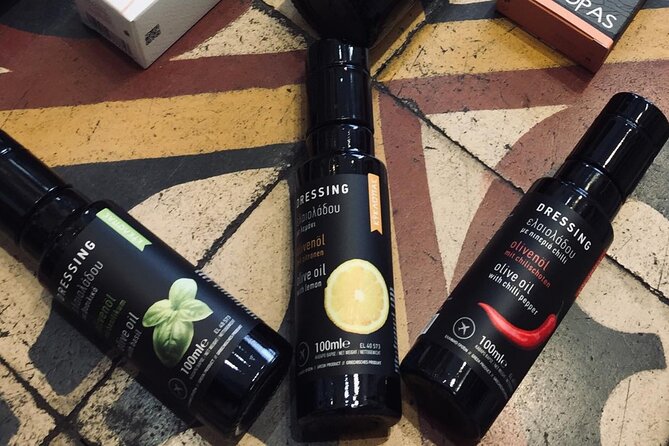
You’ll meet at Ermou 24, Thessaloniki 546 24, in the Modiano Market area, and the tasting ends back where you start. The location is the big practical win here. Modiano Market is one of those places where food culture is visible in plain sight, so your learning doesn’t feel trapped in a classroom.
When you arrive, expect the whole experience to center on Olicatessen’s store. Several guests have commented on the shop’s look and atmosphere, and that matters more than you might think—if the space feels calm and welcoming, you can focus on tasting instead of hunting for the next sample.
This is also a session that fits cleanly into a sightseeing day. With a 10:00 am start and about one hour total time, it’s the kind of activity that won’t steal half your day.
You can also read our reviews of more tours and experiences in Thessaloniki.
How the Tasting Works: Six Oils, One Guided Flight
The core promise is simple: you taste six olive oils from different regions and varieties. That number is a sweet spot for most people. You get enough variety to notice real differences in style, bitterness, and aroma, without the process dragging into a long, tiring seminar.
During the session, your guide leads you through each oil as its own mini moment. You’re not just sampling randomly—you’re learning what to pay attention to. The tour format also keeps things social. Even if you’re a couple or traveling solo, the private-group setup means there’s room for your questions without feeling like you’re shouting into a crowd.
A nice detail from the experience description: they’re collaborating directly with producers and framing the tasting around their stories. That’s a value-add, because olive oil is one of those products where the name on the bottle means less than what’s behind it—where the olives came from, and how the oil was made.
Reading the Glass: Aroma, Texture, and Flavor (Organoleptic Skills)
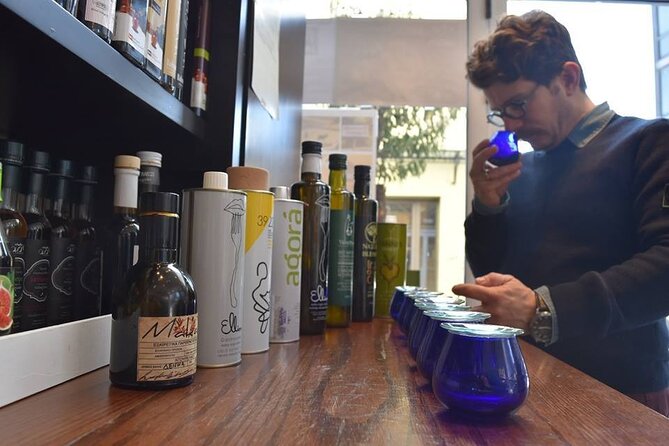
The big skill you take home from this tasting is how to taste. “Organoleptic qualities” is a fancy phrase, but it boils down to practical senses work: aroma, texture, and flavor.
Here’s why that matters for you: once you know what to look for, you stop buying olive oil based on vague promises like extra quality or premium. You start buying based on how the oil will perform with real food and real preferences—peppery versus mild, fruity versus more grassy, light versus more rounded.
Aromas are usually the easiest place to begin. Oils can smell green, fruity, or even slightly nutty depending on variety and harvest. Then comes texture: some oils feel more fluid and light, while others seem thicker on the palate. Flavor ties it together. You might notice a clean, fresh taste with a peppery finish, or a smoother profile where bitterness is present but not sharp.
Guides here also frame these senses in relation to production choices. That’s how the tasting becomes more than just a lineup of sips. It turns into a way of understanding what you’re tasting right now and what to expect later when you shop.
Why Greek Regions and Varieties Taste Different
You’ll hear about the history of Greek olive oil production, with an emphasis on tradition alongside innovation. That’s not just background reading. It helps you connect why oils can differ so much even when they’re all olive oil.
Each of the six samples is from a different region and variety, which is the tour’s main learning engine. In plain terms, regions and varieties affect the “raw material” and the character of the oil. Even when two oils are both labeled olive oil, their personality can be totally different.
The review comments put this idea into words people can feel: guests liked learning how production aspects influence the final oil, and they enjoyed the oils being described as diverse and delicious rather than all similar. One memorable phrase from the feedback was about how production influences the living olive oil itself—meaning the process is not a footnote. It shows up in what you taste.
So if you’ve ever bought a bottle that tasted great once and then felt “off” the next time, this experience is a way to understand the why. You start noticing that olive oil isn’t a single flavor. It’s a set of styles.
Meeting the Producers Through Stories (and What That Adds)
The session is built with direct producer collaboration, and you’ll hear the stories tied to the oils. This is a smart way to make sense of what can otherwise feel like random tasting notes.
When you connect an oil to a producer, you’re more likely to remember it later. And that matters because the goal isn’t just to enjoy the tasting in Thessaloniki; it’s to make better choices when you buy bottles to bring home—or just to stock your kitchen.
I also like that the experience doesn’t just focus on taste words. It talks about the organoleptic qualities and then ties them back to production and the people behind the bottles. That keeps it human, and it makes the session feel personal.
In the feedback you’ll find names of staff such as Ellie, Teresa, Alexandros, and Kostas, which is a good sign of consistency in the way the shop communicates and welcomes people. Even if your guide’s name isn’t one of those, the tone is clearly part of the brand: friendly, prepared, and focused on helping you taste with confidence.
The Bonus Bite: A Small Finale With Big Purpose
At the end, you get an extra bonus: something from the world of traditional or innovative Greek gastronomy, picked to complement what you tasted. You won’t get this as a random snack. It’s meant to act like a tasting bridge—helping you connect olive oil flavor to food context.
This final touch is easy to overlook because it’s short, but it’s actually a useful lesson. Olive oil isn’t just for tasting on its own; it’s built to interact with food. Even one bite, thoughtfully chosen, can clarify how the oil’s aroma and flavor behave when they share space with something else.
If you tend to get full fast, you should be fine. If you’re the opposite and your day starts early with lots of walking, consider this a bonus, not your meal.
Price and Value for $40.52: What You’re Paying For
The price is $40.52 per person for about one hour, with a private group format. That sounds like a clean line item, but value comes from the structure: six oils, guided tasting, production and story context, and a final complementary bite.
You’re not just paying for samples. You’re paying for the skills of noticing—how to identify aroma and texture, how to interpret flavor, and how to think about pairing. Those are the kinds of things that help you shop smarter afterward, instead of guessing which bottle will match your tastes.
It’s also worth noting that the experience is typically booked around 29 days in advance on average. That’s not a guarantee of availability issues, but it’s a hint that slots can fill during busy periods. If you want a specific morning timing and you’re on a planned schedule, booking earlier is the safer move.
What the 1-Hour Timing Feels Like (and How to Get the Most Out of It)
Because the session runs about an hour, it’s paced for focus. That’s good if you want results without a long commitment. But it also means you should show up ready to pay attention.
Here’s how to make the most of the hour:
- Slow down during each sample. Let the aroma come first, then taste, then notice the after-effect.
- Ask one or two questions that connect to your real buying habits, like how production choices change character.
- If you’re curious about pairing, listen for the principles, not just the sensory descriptions.
A possible drawback is simple: it’s not a deep, multi-course meal experience. Some people want olive oil to be part of a full food outing with a longer sit-down component. If that’s you, treat this as the learning event, then pair it with lunch or dinner afterward in the market area.
Who Should Book This Olive Oil Session (and Who Might Skip)
This is best for you if:
- you like learning through taste, not just listening
- you’re the kind of shopper who wants to buy olive oil with confidence
- you want a guided, structured way to compare regions and varieties in a short time
- you enjoy food culture that’s tied to people and production
You might skip or at least pair it carefully with other plans if:
- you’re not interested in tasting notes and sensory description
- you prefer a longer sit-down meal format
- you’re expecting something like a factory tour or hands-on pressing (the session is described as tasting-focused)
Also, the experience is marked as most travelers can participate, and service animals are allowed. It’s a private tour/activity, so it’s designed for your group rather than a large mixed crowd.
Practical Tips Before You Go (So You Don’t Walk In Cold)
Since this is a tasting, don’t arrive with an empty mind and a full stomach. You don’t need to fast, but you’ll enjoy it more if you aren’t fighting heavy cravings. If you can, keep breakfast light and plan a meal after.
Dress for a market environment. Modiano Market is active and you’ll likely be moving between areas, even if the tasting itself happens inside the store. Comfortable shoes make the morning easier.
Finally, bring one honest question. Something like: Which style will work best for the food I cook most? That way, the pairing part becomes useful right away, not just theoretical.
Should You Book Olicatessen Olive Oil Tasting in Thessaloniki?
I’d book it if you want a smart, fun food education that doesn’t require you to be an expert. The format is short, structured, and built around real differences—six oils from different regions and varieties—so you leave with clearer taste preferences, not just souvenirs.
If you’re already a serious olive-oil person, you’ll likely appreciate the organoleptic breakdown and the production context. If you’re a casual eater, it’s still approachable because the session teaches your senses step by step.
If you’re mostly in Thessaloniki for history museums or beach time and you don’t care about food tasting, this might feel like a detour. But if you enjoy markets, flavors, and learning by tasting, this is an easy yes for a morning slot.
FAQ
What is the duration of the Olicatessen olive oil tasting in Thessaloniki?
The session lasts about 1 hour.
Where does the olive oil tasting start and end?
It starts at Ermou 24, Thessaloniki 546 24, Greece and ends back at the same meeting point.
How many olive oils will I taste?
You will taste 6 olive oils from different regions and varieties.
Is this a private tour or shared with other groups?
It’s a private tour/activity, meaning only your group participates.
Is there a dietary requirement option?
Yes. You’re asked to let them know about any dietary requirements.
Can I cancel for a full refund?
Yes. You can cancel up to 24 hours in advance for a full refund.
Is confirmation provided after booking?
Yes. You’ll receive confirmation at the time of booking.